
MOQ stands for minimum order quantity — the smallest number of boxes a factory will produce in a single run. If you are new to custom packaging, the number can feel arbitrary. It isn’t. Here is what MOQ really means, why it exists, and what counts as a sensible minimum for a serious B2B buyer.
1. Why MOQ Exists in the First Place
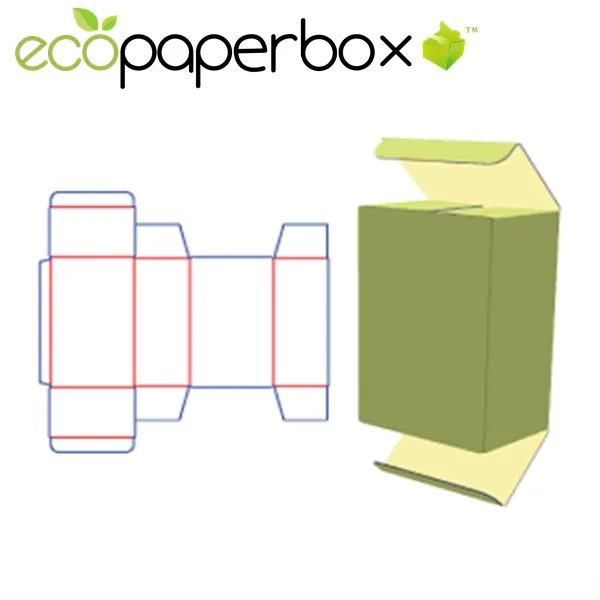
A custom box is not a stock item. Before a single box is made, the factory builds a dieline (the cut-and-fold blueprint), makes printing plates, and sets up the press and finishing line. Those fixed costs — tooling, plates, setup time — are the same whether you order 50 or 5,000. MOQ is the volume at which those fixed costs get spread thin enough to make the per-box price sensible.
Some buyers assume a low MOQ means lower quality. It does not — it means the factory’s setup is efficient enough to absorb small runs. The paper, print, and board are identical whether the run is 500 or 5,000; only the volume changes. At our Guangzhou workshop, in-house offset printing keeps setup lean, which is exactly why we can hold a low overhead and a modest standard minimum.
2. What Is Normal in the Industry
For fully custom boxes, many factories quote a minimum of 1,000 to 3,000 pieces — sometimes more for rigid (greyboard) boxes that ship assembled. Print-on-demand platforms sit at the other extreme: they will print one box, but the per-unit price is high and the structural choices are limited to their templates.
Neither extreme is “wrong.” They are different business models. The question is which one fits your stage.
3. Our Standard: 500 Pieces Across All Box Types
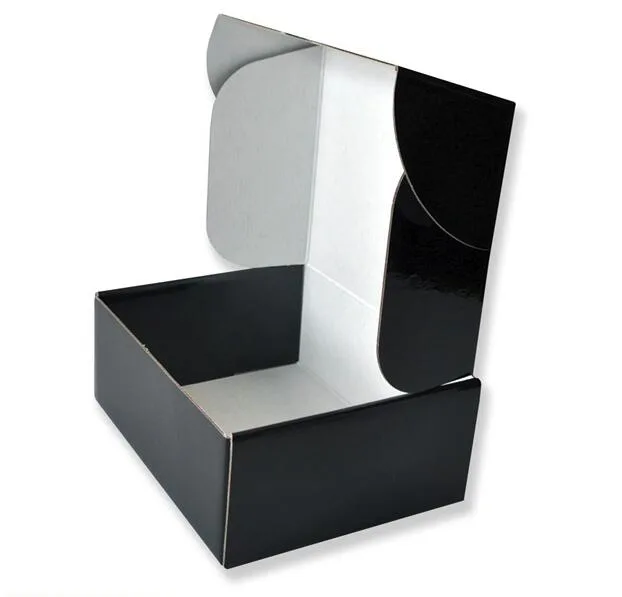
Ecopaperbox sets a standard MOQ of 500 pieces for every box type — rigid, folding carton, and corrugated. That is well below the 1,000–3,000 piece norm many factories require, and it keeps your cash risk low when you are still validating a product or a market. Five hundred is enough to run a credible launch, gather real unboxing feedback, and still get a reasonable per-box price thanks to our low overhead.
We are a Guangzhou-based manufacturer with in-house production, not a trading company reselling someone else’s boxes at markup. That is what lets us hold a 500-piece floor without padding the unit price.
4. When a Higher (or Lower) MOQ Makes Sense
A 500-piece minimum is a starting point, not a ceiling. Once a design is proven and you are selling steadily, reordering at 1,000 or 5,000 pieces lowers your unit cost because tooling is already amortized. You do not need to jump to a marketplace or a trading agent for larger runs — factory-direct pricing holds from 500 up to 5,000 and beyond, with consistent quality because the dieline and board stay on file.
The honest tradeoff: going below 500 moves you into print-on-demand economics, where per-box cost climbs and structural freedom shrinks. For most B2B launches, 500 is the sweet spot.
There is also a lead-time angle. A 500-piece run typically ships within 7–12 working days after artwork approval at our Guangzhou factory — fast enough to support a seasonal launch without filling a warehouse first. Larger runs add a little press time but rarely move the calendar by more than a few days, so MOQ and speed are not really in conflict.
5. How to Use MOQ to Your Advantage
Whatever minimum you choose, ask the factory for two things that de-risk the order: a free dieline (so the structure is correct before art) and a free blank sample (so you can check fit before print). Many international buyers visit our Guangzhou factory to tour the production lines and inspect quality before committing — a genuine differentiator versus a trader you will never meet.
A red flag is any supplier who quotes a tiny MOQ but will not show you the plant or explain the tooling. Transparency about setup cost is what separates a manufacturer from a middleman, and it is the cheapest signal you have before you send money.
For assurance on process, we hold ISO 9001 certification for our workshop, are recognized as a High-Tech Enterprise (certificate no. GR202544012474, valid from 2025-12-19 for three years), and our facility is SGS-audited. If your project needs FSC-certified paper, we can source it from FSC-certified mills with chain-of-custody documentation on request — we do not hold our own FSC certificate, and we say so plainly.
The Short Answer
A “good” MOQ is the lowest volume that gives you a fair per-box price without forcing you to sit on inventory you can’t sell. For custom boxes, our standard of 500 pieces across rigid, folding, and corrugated types lands there for most B2B buyers. For deeper reading, see our rigid vs folding guide and our in-house printing explainer, or talk to the factory about your specific run.