
Why back-to-school is a packaging moment for stationery brands
The back-to-school window is one of the few times parents and students actively shop for stationery in volume. For a small stationery brand, August and September are the highest-leverage months to look polished on the shelf and in the unboxing video. But the packaging that works for a eraser pack is not the packaging that works for a gift set — and picking the wrong structure is where most first-time brands overspend.
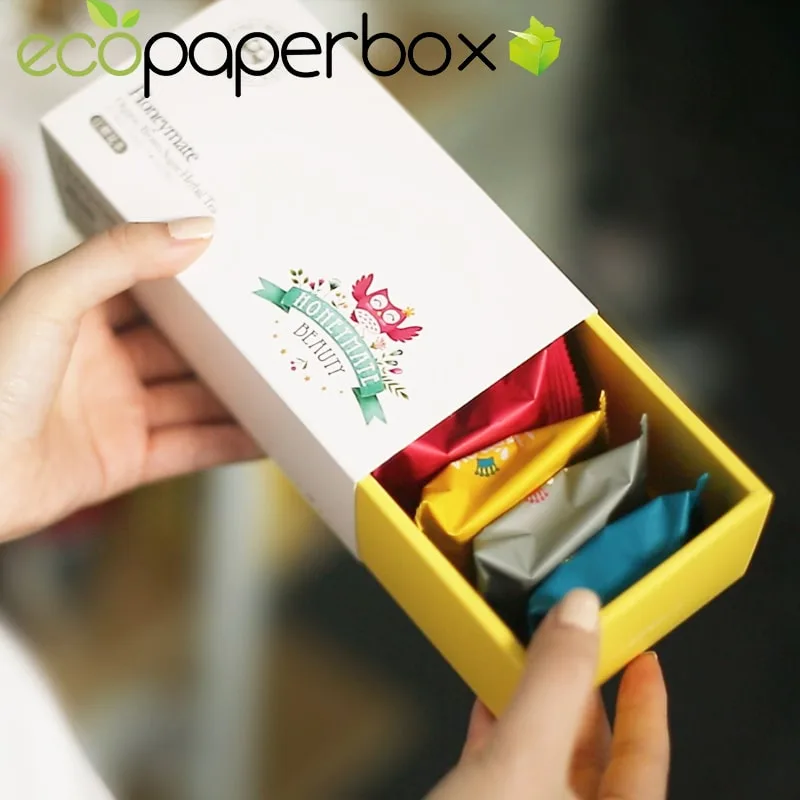
Folding cartons are the retail workhorse
For individual SKUs — pens, markers, erasers, sticker sheets, washi tape — a folding carton is the default for good reason. It prints beautifully, stacks on a shelf, and ships flat, so you are not paying freight on empty air. At Ecopaperbox we build these from SBS white card or kraft, both folding-carton stocks, never rigid board.
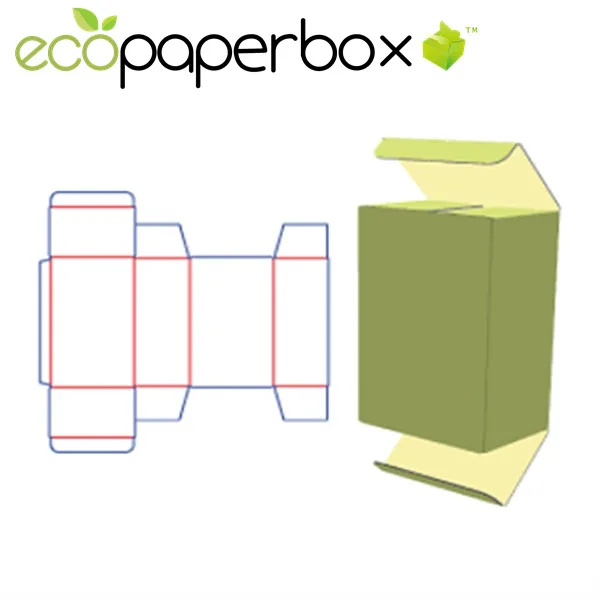
SBS white vs kraft: which folding stock?
This is the same choice every stationery brand faces, and it is mostly about the look you want, not the protection. Use the table below as a quick filter.
| Stock | Reads as | Best for |
|---|---|---|
| SBS white card | Clean, modern, true-color brand | Bright marker sets, branded pen boxes |
| Kraft | Natural, handmade, eco signal | Sketchbooks, art supplies, rustic gift sets |
Neither stock is inherently “more eco” — what matters for recycling is that the box stay mono-material. If you want the deeper breakdown, our kraft vs white cardboard guide walks through it.
Kraft boxes for the handmade signal
If your brand leans artisan — handmade notebooks, beeswax crayons, natural erasers — kraft does a lot of the emotional work before the customer reads a word. It pairs well with single-color or foil stamping and looks right at home in a school-fair or Etsy context.
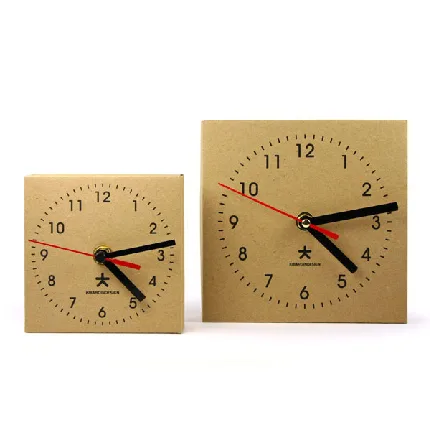
One honest caveat: kraft hides fine print less forgivingly than white SBS. Photographic artwork or tiny text reads better on white. Choose kraft for tone, not for complex imagery.
Corrugated mailers when you ship the set
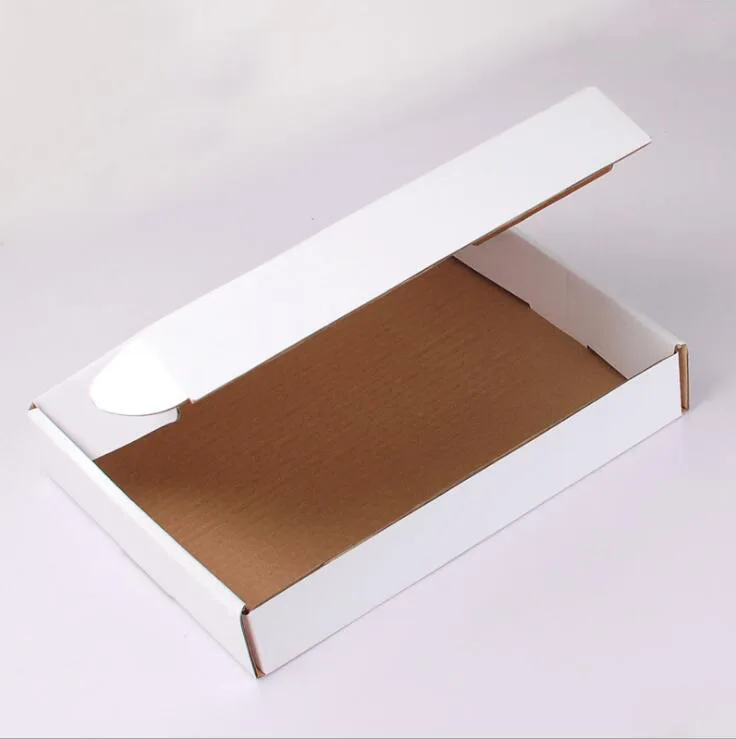
Selling a back-to-school bundle direct to a customer? A corrugated mailer is the structure that protects the cartons inside without a second box. We wrap E-flute corrugated board with white card or kraft, so it prints as cleanly as a carton while taking the hits of parcel transit. Flat-ship keeps freight down.
Premium gift sets: when a rigid box earns its cost
For a higher-priced back-to-school gift set — a curated pencil case, ruler, and notebook trio — a rigid box changes the perceived value immediately. Rigid means greyboard (1000–1500 gsm) mounted with 157 gsm C2S art paper, and it ships assembled. If freight matters, the collapsible magnetic version is the only rigid type that folds flat for shipping while keeping the premium feel.
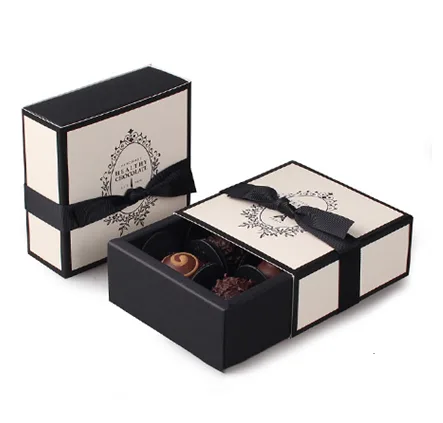
Be candid with yourself: a rigid box at low volume is a margin decision, not a default. Our rigid vs folding comparison lays out the freight tradeoff in plain numbers.
A realistic launch plan at MOQ of 500
You do not need 3,000 boxes to look legitimate. Ecopaperbox runs a standard MOQ of 500 pieces across most box types — the industry used to ask for 1,000–3,000+. That lower floor lets you test a back-to-school design, validate the unboxing with real customers, and reorder at 1,000 or 5,000 once sell-through is proven. It is a strategy, not a gimmick.
- Test (500 pcs): one folding carton design, SBS or kraft, to learn what prints well.
- Validate (1,000 pcs): add a corrugated mailer once you are shipping sets.
- Scale (5,000 pcs): introduce a rigid gift edition for the holiday push.
Lead time runs 7–12 working days after artwork approval. Plan a little extra buffer if you want foil or embossing, since those finishing steps add passes.
Right-sizing: don't pay for air
Stationery items are awkwardly shaped — long rulers, chunky erasers, odd tape rolls. The temptation is to spec a generous box “just in case.” Resist it. A box that is 30% larger than the product roughly doubles your dimensional weight on express freight and wastes board on every unit. Because our dieline is free, you can specify the exact inner dimensions at a 500-piece run and fine-tune after one shipment. Right-sizing is effectively free money on every reorder, and it is the single biggest lever most new brands miss.
A related mistake is over-finishing too early. Foil and embossing look great on a hero gift set, but they add cost and lead time to everyday SKUs where a clean one-color print already sells the product. Match the finish to the price point, not to your aspirations.
How a Guangzhou factory fits the picture
Ecopaperbox is a Guangzhou-based custom paper packaging manufacturer with in-house offset printing, lamination, die-cutting, and hand assembly. Because the production is owned rather than subcontracted, the unit price stays competitive from 500 to 5,000+ pieces, and color stays consistent across reorders. Many marketplace “suppliers” are simply traders reselling the same Guangzhou boxes at a markup — buying factory-direct removes that layer.
For alternatives: if you need 50 boxes by next week in the US, a print-on-demand service like Packlane or Arka will beat any factory on speed. If you are validating a design and want the lowest cash risk, a 500-piece run from a factory like ours is hard to beat on unit cost. Neither is “wrong” — they solve different problems.