
Ordering a cardboard box sounds simple until someone asks which flute you want. If you have shopped for custom shipping or mailer boxes, you have likely seen "E flute," "B flute," or "F flute" mentioned with little explanation. This guide explains what a flute actually is, how E, B, and F differ, and—more usefully—which one fits your product. It is written from our Guangzhou production floor, where we make corrugated boxes daily, not from a marketing brochure.
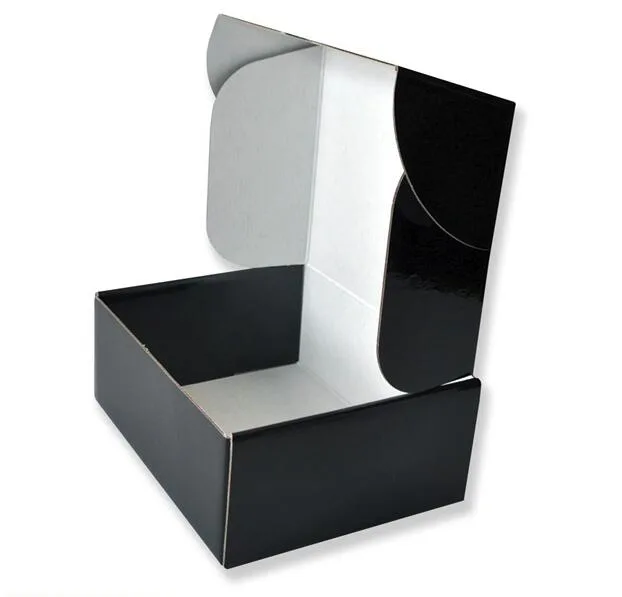
What is a flute, really?
Corrugated board is not a single sheet of cardboard. It is a sandwich: two flat liner boards with a wavy, arched layer—the flute—glued between them. The flute is the ridged middle that gives the board its stiffness and its cushioning. Run a finger across a corrugated box wall and you can feel the arches running in one direction.
The height and spacing of those arches is what people mean by "flute size." A taller, more widely spaced flute (such as B) cushions better and resists crushing. A shorter, denser flute (such as E or F) gives a smoother print surface and a thinner, lighter box. This one difference changes how a box performs and what it costs to ship. Corrugated is a different animal from a rigid setup box—if you are deciding between the two, our rigid vs folding box guide breaks it down.
E flute — the ecommerce mailer default
E flute is roughly 1.5 mm thick. It is the most common choice for subscription and mailer boxes because it is thin enough to keep shipping weight down yet stiff enough to protect most lightweight products. The short flute also prints cleanly, so full-bleed branding looks sharp rather than washed out.
A typical corrugated mailer from our line uses E flute wrapped in white card or kraft. That is why an E-flute mailer feels solid in the hand but still folds flat for storage and freight. If you sell apparel, cosmetics, accessories, or small electronics, E flute is usually the safe starting point. It is also the flute most print-on-demand services default to, though their per-unit price is typically higher than a direct factory run at volume.
B and F flute — when you need more cushion
B flute is about 3 mm thick—roughly double E. The taller arch absorbs more impact, which matters for heavier items, glass, or products that get stacked and crushed in transit. The trade-off is a slightly rougher print surface and a bulkier box, so it suits shipping protection more than shelf presentation.
F flute sits between the two, around 0.8 mm. It is the thinnest of the three and is often chosen when a folding-carton look is wanted but a little rigidity helps—think premium retail sleeves or small gift presentation that still needs to survive the post. A quick way to choose:
| Product profile | Suggested flute |
|---|---|
| Under ~1 kg, non-fragile | E flute |
| 1–3 kg or fragile / glass | B flute |
| Carton-thin look + slight rigidity | F flute |
When in doubt, tell your supplier the product weight and how it ships. A competent factory will spec the flute for you instead of leaving you to guess—and will confirm the liner weight too.
What the corrugated is wrapped with
The board is only half the story. The outer and inner liners are what your customer sees and what carries the print. At our factory the standard wraps are white card (clean and bright, best for true-color branding), kraft (the natural brown, recycled-look, rugged feel), or a specialty paper for a more textured finish. All three wrap the same fluted core.
This is also where eco claims get murky. A kraft-corrugated box is paper and widely recyclable, but a gloss or soft-touch lamination on top can reduce that. Mono-material, lightly finished boxes sort most easily. If recyclability is a priority, ask for minimal coating—our team can advise on a finish that still looks premium without hurting sortability. For a deeper look at what "recyclable" really requires, see our recyclable packaging guide.
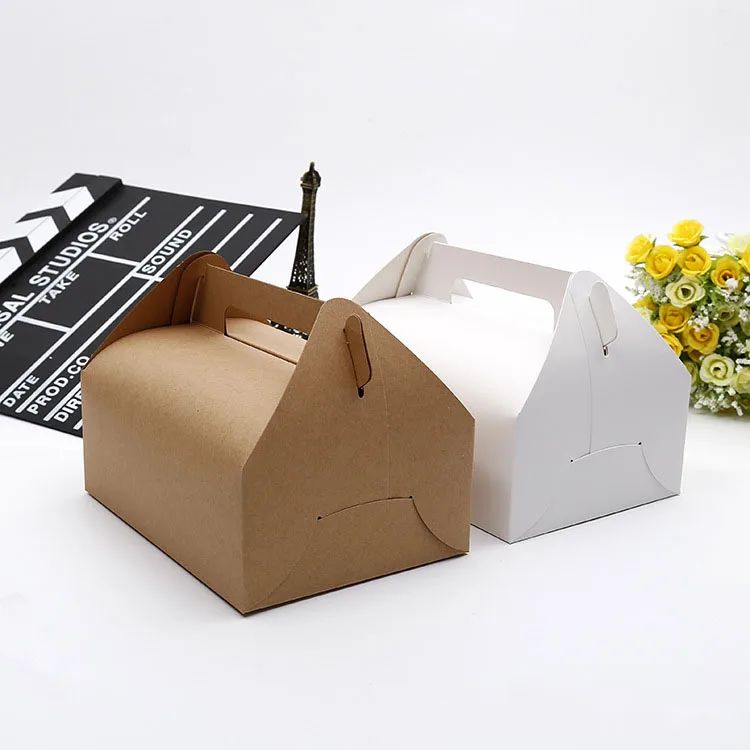
One practical note before you order: when comparing suppliers, many online listings never state the flute, which makes price comparisons misleading—a B-flute box and an E-flute box of the same footprint are not the same product. Ask for the flute and the liner weight, and you can compare like for like. We run this as a Guangzhou-based manufacturer with in-house printing and finishing, so flute, liner, and print are controlled under one roof rather than subcontracted. Buyers are welcome to visit our Guangzhou factory—many international clients tour our production lines and conduct on-site inspections before committing to an order. Our Guangzhou workshop is ISO 9001 certified, holds High-Tech Enterprise status (certificate no. GR202544012474, issued 2025-12-19), and is SGS-audited, so the quality system is verified by a third party rather than just claimed. Standard MOQ is 500 pieces across all box types, well below the 1000–3000+ typical in the industry and low enough for an affordable test run. Lead time is typically 7–12 working days after artwork approval. You can explore our customizable packaging options to see what we produce.