
Every December, a wave of urgent emails lands in packaging inboxes: we need branded gift boxes for next week. By then, the realistic window for custom holiday packaging has already closed. At Ecopaperbox, a Guangzhou-based custom paper packaging factory with in-house printing and finishing, we see the same pattern each year. The brands that ship beautiful holiday boxes are the ones who locked their order in October, sometimes earlier.
Why Plan Now Really Means October
The reason is simple math. A custom rigid or collapsible magnetic gift box needs structural design, printing, finishing, and assembly before it ever reaches a ship. After artwork approval, production itself typically runs 7-12 working days. But the holiday queue is the busiest period of the year for most factories, and that 7-12 day baseline can stretch when everyone orders at once.
Then add transit. Sea freight to the US or Europe can take 30-45 days; air or express is faster but costs more and still needs the boxes made first. A December deadline almost always means paying rush premiums or accepting plain stock boxes. Ordering in October keeps you off the panic curve.
Rigid or Collapsible Magnetic: Which Holiday Box
For gift presentation, two structures dominate. A rigid box is built from greyboard, typically 1000-1500 gsm, mounted with 157 gsm C2S art paper or a specialty paper. It ships fully assembled and feels substantial in the hand, exactly the premium unboxing people associate with holiday gifts.
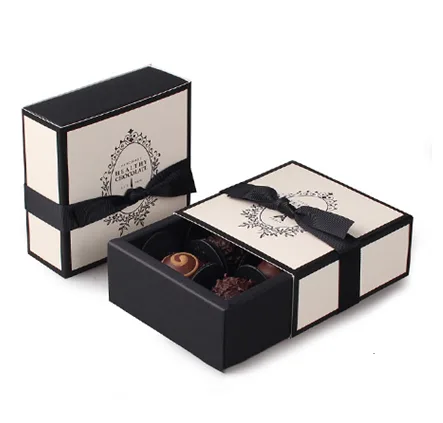
The collapsible magnetic box uses the same greyboard-and-art-paper construction but is engineered to fold flat, with hidden magnets in the corners. It is the only rigid-style box that flat-ships, which can cut freight dramatically on a large holiday run while still looking premium when assembled. If you ship in volume, that freight difference is worth real money.
The tradeoff is assembly labor: a collapsible magnetic box arrives flat and your team folds it, whereas a rigid box shows up ready to fill. For small holiday teams, that folding step is a real cost in time, so weigh freight savings against pack-out labor before choosing.
Premium Finishes Need Lead Time
Holiday boxes lean on finishing: foil stamping, blind emboss, soft-touch lamination, spot UV. These are what make a box read as a gift rather than a shipping carton. But each finish is an extra production step with its own setup, and during peak season those steps queue up.

A practical tip: restraint sells better than full coverage. A single foil line or a quiet emboss on a clean box looks more expensive than an all-over metallic print, which can read as dated. If you want a specific brand color, specify it as a Pantone spot color so the factory can match it run to run. One honest tradeoff to weigh: soft-touch and gloss lamination make a box feel premium but can reduce its recyclability, because the coating is harder to separate from the paper fiber. If sustainability is part of your brand story, consider a bare or matte-art-paper finish instead of lamination.
Test a Holiday Design at 500 Pieces
You do not need to commit to thousands of boxes to launch a holiday design. Ecopaperbox standard MOQ of 500 applies across most box types, far below the 1000-3000 plus that used to be the industry norm. That low floor lets you print a small test batch, validate the unboxing with real customers, and reorder at scale only if the design earns its place.
Many marketplace suppliers are traders reselling the same Guangzhou-made boxes at a markup. As a factory with in-house offset printing, lamination, die-cutting, and hand assembly, we can take you from 100 test pieces to 5000 plus without switching vendors or losing color consistency. For bulk holiday runs, that continuity matters.
A common mistake is waiting for final sales forecasts before you design. You do not need to know the exact quantity to start the artwork and structure; those are independent of volume. Lock the design in October, then size the first run to a conservative estimate. If demand surprises you, the dieline is already on file and a reorder is a simpler, faster step than starting from zero.
A Realistic Holiday Timeline
Here is a schedule that actually works:
- Early October: finalize artwork and structure, place the order. This protects you from peak-season delays.
- October to November: production, 7-12 working days after approval, plus transit. Sea freight needs the earlier slot; air or express can recover a late start at higher cost.
- Late November: boxes in hand, ready for fulfillment before the rush.
Start the conversation even earlier if your design involves heavy finishing or a custom size. Free dieline support and a free blank sample let you confirm structure before committing to print, a small step that prevents an expensive mistake on a seasonal run. Considering the flat-shipping option for a large run? See our guide to collapsible magnetic boxes, or explore our custom luxury gift boxes.