
Picking a mailer looks trivial until a customer posts a crushed box online. The two options most small brands weigh are the kraft or corrugated paper mailer and the poly (plastic) mailer. They are not interchangeable: one is a rigid paper structure, the other a thin plastic pouch. At Ecopaperbox, a Guangzhou packaging factory with in-house printing, we make paper mailers in runs from 500 pieces upward, so this comparison comes up constantly. Get the choice wrong and you pay either in freight or in damaged goods - both hit a small brand's margin.
What a Kraft Mailer Actually Is
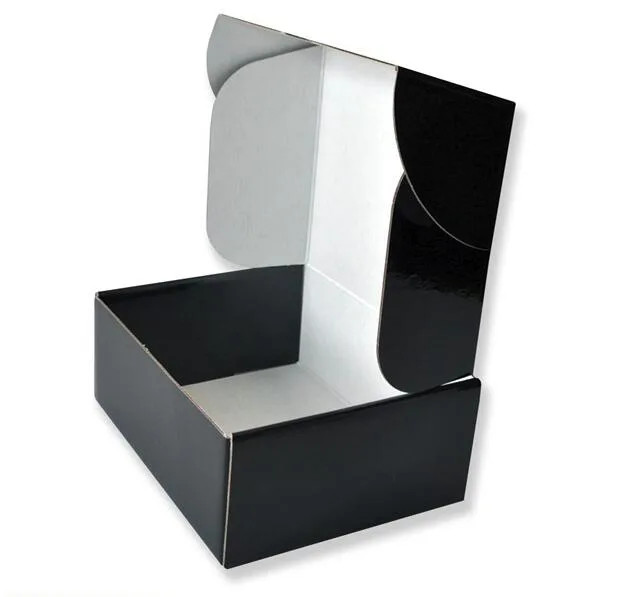
A kraft mailer is corrugated board - usually E-flute - wrapped with kraft or white card. The fluted middle gives it crush resistance; the paper wrap takes print. That structure is what lets it stand up, stack, and protect what is inside. It ships flat and folds into a rigid shipper, which also keeps freight volume down versus an assembled box.
This differs from a folding carton, which uses solid SBS board with no flute. The flute is exactly why a mailer survives a conveyor belt while a poly bag simply bends around whatever hits it. Most kraft mailers we produce run in the 1.5-3 mm wall range depending on flute - substantial enough to feel premium without ballooning parcel weight. Choosing kraft over white card is mostly aesthetic: kraft reads natural and rustic, white reads clean and modern. Both print well; the wrap color changes the look, not the protection.
The Poly Mailer Case: Lighter and Water-Resistant
Poly mailers are plastic film: light, flexible, and naturally water-resistant. For soft, non-fragile goods - apparel, fabric, many accessories - they do the job at the lowest weight and the smallest storage footprint. If your product cannot break and just needs to arrive dry, poly is hard to beat on freight cost.
The honest limits: a poly mailer offers almost no rigidity, so it protects nothing from a corner drop or a heavy parcel landing on top. It also cannot carry premium print the way a paper mailer can, which matters if unboxing is part of your brand. A quick weight check explains the freight gap: a 200 g t-shirt in a poly mailer weighs roughly 220 g all-in, while the same shirt in a kraft mailer lands near 400 g once the board is counted. On express shipments billed by actual or dimensional weight, that difference is real money across a few hundred parcels.
Protection and Rigidity: Where Paper Wins
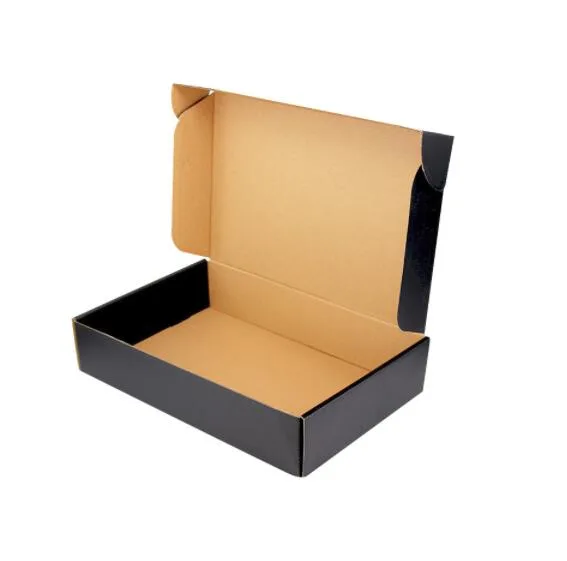
For anything rigid, fragile, or shaped - candles, glass, electronics, gift sets - a kraft corrugated mailer clearly protects better. The board absorbs impact and holds its shape; paired with an insert it cradles a product through sorting and last-mile handling. Poly simply wraps; it does not shield.
Consider a candle brand: a glass jar in a poly bag survives only if nothing lands on it, whereas in a kraft mailer with a simple insert the same jar rides through sorting unharmed. The mailer is the difference between a five-star unboxing and a refund request. This is also why paper mailers suit subscription boxes, where the parcel is part of the product and a dented shipper reads as a damaged brand. A practical rule: if a drop would damage the item, ship it in paper or a box, not poly.
Print, Presentation, and Eco
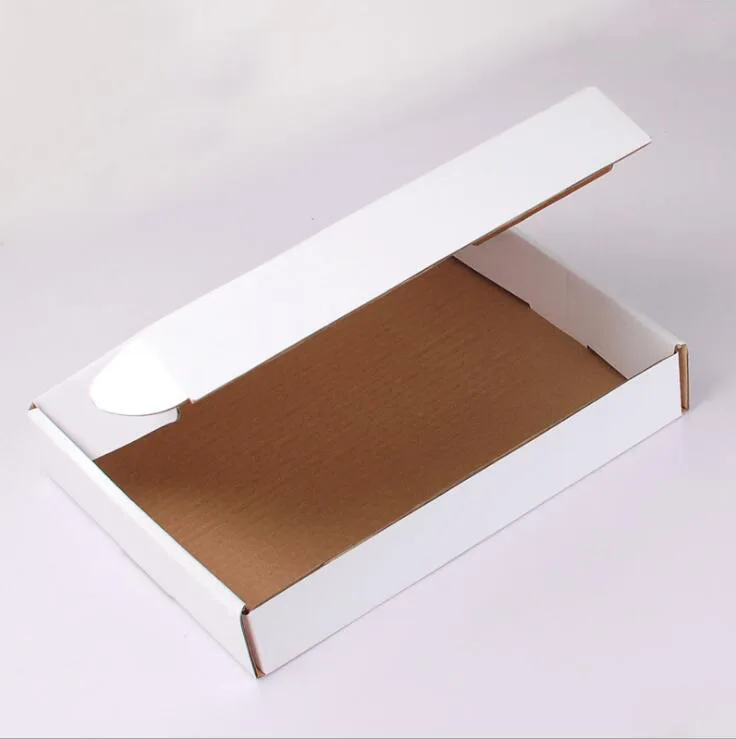
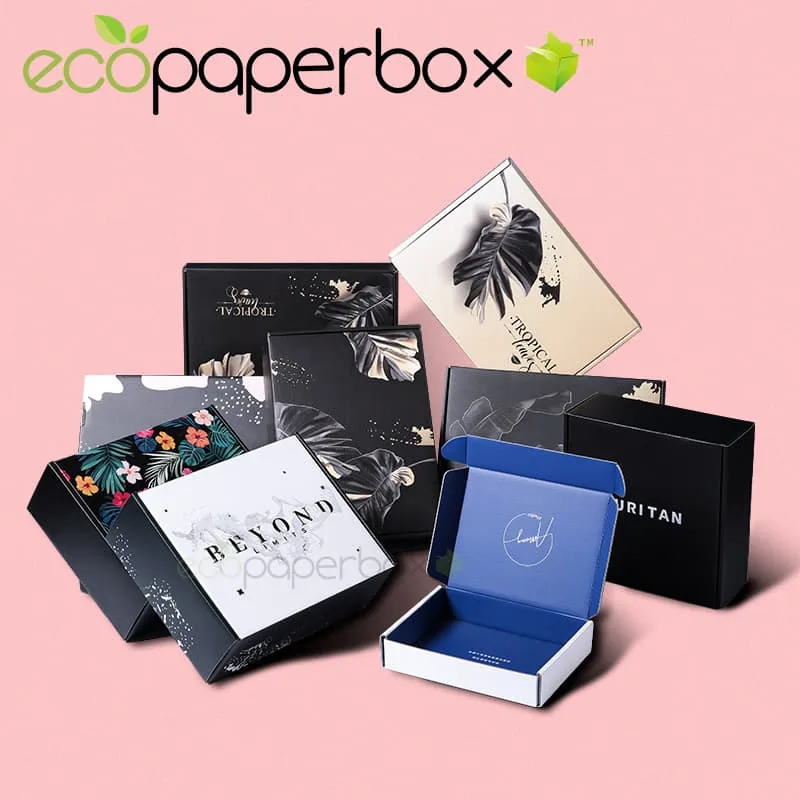
Paper mailers print in full color and read as a finished, branded moment; poly mailers are usually a single-color logo at best. Because we print in-house on our own presses, a kraft mailer can carry the same artwork as your carton for a consistent look. Production runs 7-12 working days after artwork approval, so a 500-piece test is quick to turn around.
On sustainability, kraft and white corrugated are paper - widely curbside-recyclable as mono-material when not laminated. Poly is plastic; curbside acceptance varies and it is not compostable. We can also source FSC-certified paper from FSC-certified mills for projects that require it, with chain-of-custody documentation available on request. There is no prize for the "greener" label alone - mono-material paper recycles more reliably than mixed plastic, but the biggest win is simply shipping the right structure so fewer goods get destroyed.
A Quick Decision Guide
| Factor | Kraft / corrugated mailer | Poly mailer |
|---|---|---|
| Rigidity & crush protection | Strong | None |
| Weight & freight | Heavier | Lightest |
| Water resistance | Low (paper) | High (plastic) |
| Print / branding | Full-color, premium | Minimal |
| Recyclability | Paper, widely accepted | Plastic, varies |
| Best for | Fragile, rigid, gift items | Soft, non-breakable goods |
When you outgrow the 500-piece test, reorders from the same dieline are fast and consistent - the structure is saved on file, so only the print changes. That is the advantage of working with a factory that keeps your tooling on hand rather than re-quoting from scratch each time.
If you are launching a new SKU, order 100 kraft mailers (our standard MOQ of 500 pieces) to test the unboxing and returns rate before a larger run. For background on board structure, see our corrugated flute guide.