
Ordering custom boxes from a factory is easy. Getting 5,000 of them that all look the same, survive shipping, and close cleanly is harder. Quality control is the quiet step that separates a box you are proud to ship from one that costs you returns and refunds. Here is what good packaging factories actually check, and what they cannot promise.
A simple way to picture the cost of missing it: a brand launching a limited holiday run discovers at delivery that the gold foil on 800 boxes is misaligned by two millimeters. That is not a printing impossibility, it is a missing check. The same run, sampled at the press, would have been corrected in the first 50 boxes.
Why QC matters more than the unit price
A box that costs a few cents less per unit but ships with crooked print or a warped lid is not a bargain. The cost shows up later: customer photos, wasted inserts, and reorder delays. At Ecopaperbox, a Guangzhou-based custom paper packaging manufacturer with in-house offset printing, lamination, die-cutting, and hand assembly, QC runs through every stage rather than only at the end.
The honest truth: QC adds a little time, and no factory catches 100% of defects. The goal is to make problems rare and predictable, not invisible.
The ISO 9001 backbone
A documented quality system is the difference between "we eyeball it" and "we can repeat it." Ecopaperbox holds ISO 9001 quality management certification for its Guangzhou workshop, with a certificate copy available on request. It is also a certified High-Tech Enterprise (certificate no. GR202544012474, valid from 2025-12-19, three years) and an SGS-audited facility, with the depth-audit report on file.
What ISO 9001 actually means on the floor: incoming material is checked against spec, production runs follow a standard work order, and finished goods are sampled against an agreed criterion. When you reorder months later, the recorded dieline and board spec keep the second run consistent with the first.
Print alignment and color control
Misregistration, where a border or logo sits a millimeter off the edge, is the most common complaint buyers raise. In-house offset printing, the factory runs its own presses, lets the team check color on the actual substrate during the run rather than after it ships.
For brand-critical colors, specify a Pantone spot rather than relying on CMYK conversion; a physical sample is the only reliable proof. Honest note: screen-to-print always shifts slightly, so judge the box, not your monitor.
Most factories sample a few sheets per thousand, not every box. Ask what the sampling rate is. A Guangzhou factory running its own presses can pull and inspect a sheet mid-run and stop the press if registration drifts, which a trading company that subcontracts print usually cannot do.
Adhesion, lamination, and structural glue
A rigid box is greyboard (1,000 to 1,500 gsm) mounted with 157 gsm C2S art paper or a specialty paper, then glued and assembled by hand. The QC points here are edge wrapping, no greyboard showing at the corners, glue tack, flaps stay shut, and lamination adhesion, the coating should not peel.

Soft-touch and foil finishes look premium but are less forgiving: a fingerprint or a lifted foil edge is visible on dark colors. QC samples these finishes more closely than plain matte.
Why a first-article sample saves money
Before a full run, a first-article or pre-production sample locks the structure and finish. Buyers often skip it to save a few days, then discover the lid is too tight. A short sample step turns a 5,000-box gamble into a confirmed spec.
Drop and transit testing for shipping boxes
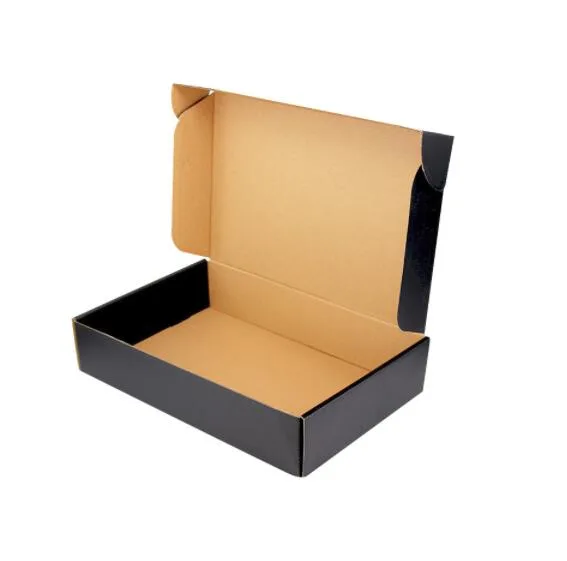
Corrugated mailers and shippers, E-flute wrapped with white card, kraft, or specialty paper, face real handling. Good factories do spot drop or compression checks on the carton construction, especially for heavy or fragile contents like glass bottles or candles.
Honest limit: a factory can test the box, not your courier. Pair a sound structure with right-sized inserts and you remove most in-transit damage.
Typical QC checkpoints at a box factory
| Checkpoint | What is measured | Common failure caught |
|---|---|---|
| Material spec | Board gsm, flute, paper grade | Wrong board weight or flute |
| Print registration | Alignment to dieline, color | Misaligned border, off-color |
| Adhesion | Glue tack, lamination bond | Lifted foil, peeling coat |
| Structure | Lid fit, corner wrap, slide | Greyboard showing, tight drawer |
| Transit | Drop / compression of shipper | Collapsed wall, crushed corner |
What QC can and cannot guarantee
QC reduces risk; it does not erase it. Batch-to-batch shade variation, a rare crushed carton, or a color you imagined differently are still possible. The fixes that actually work: start at a low MOQ to validate the real box, keep the dieline on file for consistent reorders, and request a physical sample before a large run.

Ecopaperbox offers a free dieline and a free blank mock-up so you can check structure before committing to print. The most cost-effective time to catch a QC problem is before it reaches 1,000 units. Standard MOQ is 500 pieces, and typical lead time is 7 to 12 working days after artwork approval.
For a broader look at choosing a manufacturing partner, see our guide on how to vet a packaging supplier, and if low minimums are your priority, start with low-MOQ custom packaging at 500 pieces.