
The honest version of "7-12 working days"
Ask five packaging suppliers for a lead time and you get five numbers, most of them optimistic. Our standard answer is 7-12 working days for production, counted from the day artwork is approved u2014 and the second half of that sentence is where schedules go wrong. The clock starts when the print-ready file and the dieline are both signed off, not when you send the first enquiry.
That is not a technicality. In practice the pre-press stage u2014 quoting, structure, sampling, revisions u2014 often takes longer than production itself, and most of that time sits on the brand's side of the table rather than the factory's.
What the 7-12 days actually covers
Inside our Guangzhou plant, a run moves through these stages:
- Prepress and plate making u2014 about 1 day. Files are trapped, imposed and plated for offset.
- Offset printing u2014 1 to 2 days. Presses are in-house, so a job queues in our own schedule instead of a subcontractor's.
- Lamination or surface finish u2014 1 to 2 days. Gloss film, matt film, soft-touch and spot UV each need a pass plus drying time.
- Foil stamping, embossing or debossing u2014 1 to 2 days. Each effect needs a metal die cut first.
- Die-cutting and creasing u2014 about 1 day.
- Gluing or hand assembly u2014 1 to 3 days. Folding cartons run through a gluer; rigid boxes are wrapped by hand. This is the single largest variable in the whole schedule.
- Inspection and packing u2014 about 1 day.
Add the buffer every factory keeps for reprinting a bad sheet and you get 7-12 days: a one-colour kraft tuck carton at the low end, a foil-stamped rigid box at the high end.
Where the weeks quietly disappear
These happen before day one of production, and they are where launch dates get lost:
- Quote and spec confirmation: 1-2 working days, longer if dimensions are still moving.
- Dieline drawn to your dimensions: 1-2 working days. Free from us, but still needs your designer to check it.
- Blank white sample: a few days to make, plus international courier transit.
- Artwork revisions: the real wildcard. Some brands approve in 24 hours; others take three weeks because the designer is booked elsewhere.
- Printed pre-production sample (optional): roughly a week plus courier u2014 it is effectively a miniature production run with its own plates and dies.
If you need boxes on a fixed date, work backwards and add every line above. We covered this stage in our guide to the packaging sample process.
Box type moves the timeline more than the artwork does
Structure and material decide how much is machine time and how much is hand work:
- Folding cartons u2014 SBS white card, kraft, or lightweight corrugated. Printed flat, machine-glued, shipped flat. Fastest option.
- Corrugated boxes u2014 E-flute board wrapped with white card, kraft or specialty paper. Fast, and they ship flat.
- Rigid gift boxes u2014 a greyboard core, typically 1000-1500 gsm, hand-mounted with 157 gsm C2S art paper or a specialty stock. Slowest, because wrapping is manual, and they ship assembled, so they take more freight volume.
- Collapsible magnetic boxes u2014 the same greyboard and art-paper construction with hidden magnets, engineered to fold flat. The one rigid style that ships flat, which is why freight-conscious brands keep choosing it; hand-inserting magnets adds a little assembly time.
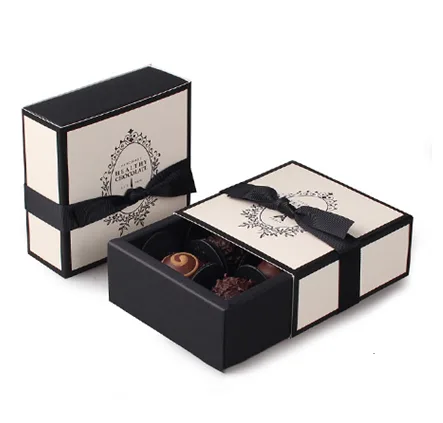
A rigid box does not behave like a printed carton. The print stage is similar, but assembly is people-hours, and people-hours are what move a 7-day job to 12.
What genuinely adds days
- Pantone matching: extra press setup and a colour approval loop u2014 half a day to a day.
- Multiple finishes: foil plus emboss plus spot UV means three separate passes, not one.
- Specialty paper not held in stock: 2-5 days to bring it in.
- Inserts: cardboard, moulded pulp or foam inserts carry their own tooling and schedule.
- A revision after "final" approval: resets prepress, and the plates too if they are already made.
- Very large runs: 5000 pieces and up mainly extend press and assembly time, not setup u2014 a few extra days, not a doubling.
Transit is a second, separate clock
Production and delivery are two different numbers, and quotes that blur them cause most of the disappointment in this industry. Express courier is quickest and suits small runs; air freight sits in the middle; sea freight has the lowest cost per box and is by far the slowest, with port and customs steps nobody fully controls. Ask for both numbers separately, in writing.
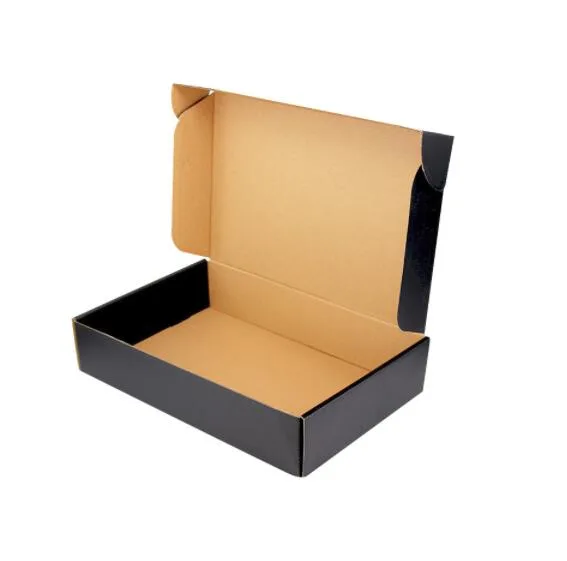
Flat-shipped structures u2014 folding cartons, corrugated boxes and collapsible magnetic boxes u2014 cut freight volume sharply, which lowers cost and sometimes shortens transit because the shipment fits a faster service. Whether customs clearance is your problem or ours depends on the incoterm, unpacked in DDP vs EXW.
Two shutdowns worth planning around
Chinese New Year is the big one: production winds down for two to three weeks in late January or February, with a slowdown before and a ramp-up after, so Q1 stock should be locked in December. National Day in early October is shorter but real. September to November is the busiest window across Guangzhou as brands print holiday packaging u2014 the quoted range still holds, with less slack in it.
How this compares with the alternatives
Web-based platforms such as Arka, Packlane and Noissue are genuinely good at removing friction: instant pricing, upload-and-go artwork, no time-zone email chains. Their production windows are commonly quoted in a broadly similar range, with their own shipping on top u2014 check their current pages, since these change. The tradeoffs are fixed structure and finish menus, limited or absent rigid and collapsible magnetic options, few specialty stocks, and a platform margin in the unit price.
Local print-on-demand deserves a fair hearing too: for a plain corrugated mailer in small quantity it can beat anything shipped from Asia and skips customs entirely, but it is weaker on premium structures, finishing and repeat-order economics.
And the fair sceptical question: surely a factory on the other side of the world is slower? For a simple mailer, often yes. For a foil-stamped rigid box, less so u2014 those are mostly made in Guangzhou regardless of who sells them, including boxes listed on marketplaces by traders who add a markup and an extra communication layer on top of the same schedule.
Small orders are not slower orders
Our standard minimum is MOQ 500 pieces across most box types, and 500 pieces does not go to the back of the queue. Setup time u2014 plates, dies, wrapping fixtures, colour approval u2014 is identical whether you print 100 boxes or 5000; only press and assembly time scale with quantity. A 500-piece order lands in the same 7-12 working day window, which makes a low-risk test run practical rather than theoretical. If it sells through, the reorder runs on the same tooling at the same plant, so the second order is usually faster.
What we cannot promise
No factory controls customs inspection, courier backlogs, typhoon season at the port, or how long a colour proof sits in someone's inbox. What we can control is being specific: production and transit days quoted separately, a clear statement of when the clock starts, and a warning if a chosen finish will push the schedule. If a date is critical, lead with the date rather than the specification u2014 it changes what we recommend.