
Why a Box Doesn't Have One Price
Ask a packaging factory "how much is a custom box?" and you'll rarely get a single number. That's not evasiveness — it's because unit price depends on board weight, print method, finishing, and above all, how many you order. At Ecopaperbox, a Guangzhou factory with in-house offset printing and finishing, our standard MOQ is 100 pieces, far below the 1000–3000+ minimum that was the industry norm a few years ago. Understanding the volume curve helps you order the right amount instead of guessing.
The Real Reason Price Drops With Volume: Setup Amortization
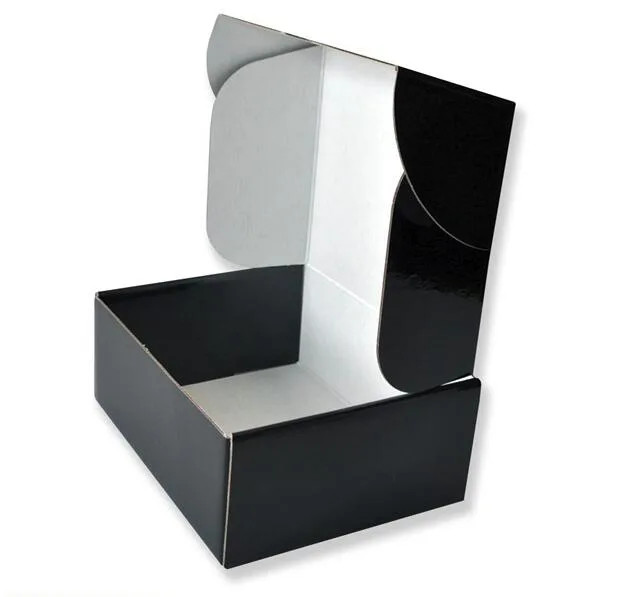
Most of a box's "fixed" cost is setup, not material. A dieline has to be drawn, a printing plate made, and the press calibrated to your artwork. Those steps cost roughly the same whether you print 100 boxes or 5,000. Spread that fixed cost across more units and the per-box slice shrinks.
This is why a Guangzhou factory with low overhead can quote a reasonable unit even at 100 pcs — the setup is real, but it's a manageable one-time step, not a barrier. Ecopaperbox offers a free dieline, which removes one of those setup costs entirely.
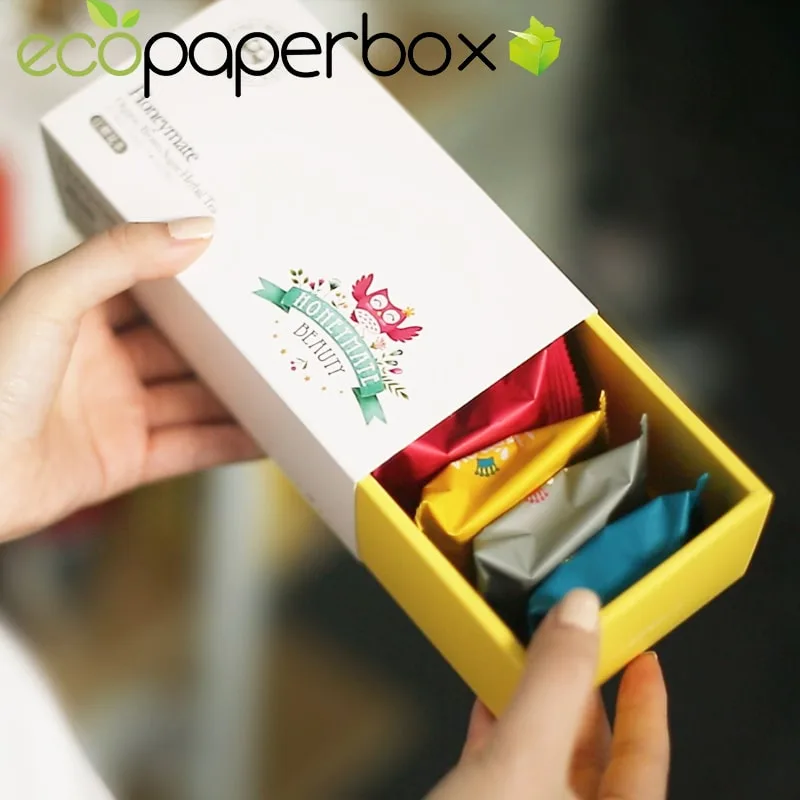
It also helps to separate "tooling" from "running" cost in your head. Tooling (dieline, plate) is paid once and reused on every reorder; running cost (board, print, labor) recurs on every batch. A more complex structure — a tray-and-sleeve carton, for example — carries a slightly higher tooling step but the same per-unit logic still applies as volume rises.
What Actually Happens at 100, 500, 1000, and 5000
Here is the general shape of the curve. Treat the numbers as illustrative ranges, not a quote — your board, size, and finish move the exact figure.
| Quantity | What's happening | Typical unit trend |
|---|---|---|
| 100 pcs | Setup cost spread over the fewest units. Best for validating unboxing with real customers. | Highest per-box, but lowest total cash outlay |
| 500 pcs | Setup amortizes 5x more. Common first repeat after a successful test. | Noticeably lower per-box |
| 1000 pcs | Plate and press setup now negligible per unit. Sweet spot for steady sellers. | Low, stable unit cost |
| 5000 pcs | Maximum setup leverage; material bought in larger rolls. Best for proven, fast-moving SKUs. | Lowest unit cost |
Material and Structure Also Shift the Curve
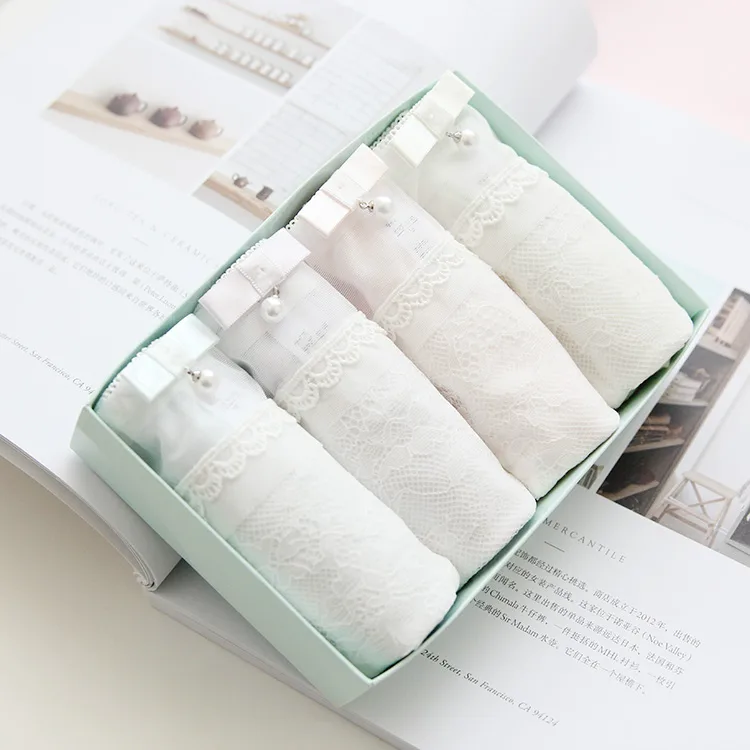
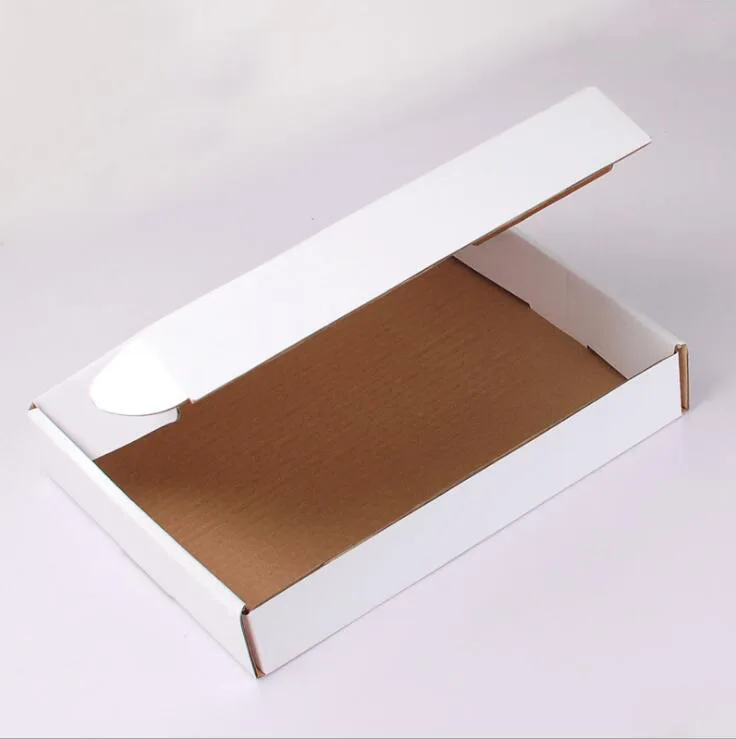
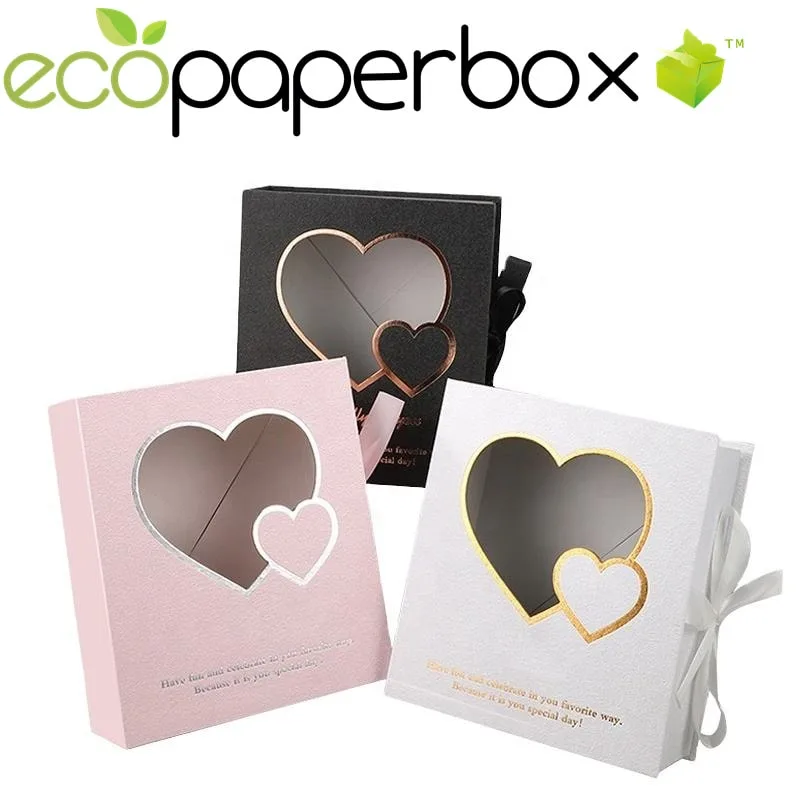
Volume isn't the only lever. A folding carton in 300gsm SBS ships flat and stacks cheaply, so its freight per unit drops fast at scale. A rigid gift box built from 1000–1500gsm greyboard wrapped with 157gsm C2S art paper ships assembled, so freight grows with unit count — the box itself may get cheaper, but the shipping line does not. The collapsible magnetic box is the one rigid style that folds flat for shipping, easing that freight penalty while keeping the premium look.
The Freight and Duty Layer Most Buyers Forget
Unit box price is only half the landed cost. A 5000-piece run may lower the per-box price, but it also means one large shipment — and one larger freight and duty bill arriving at once. For a brand watching cash flow, two 1000-piece orders spread across the year can beat a single 5000-piece gamble, even if the per-box math looks slightly higher. Many marketplace "suppliers" are traders reselling the same Guangzhou boxes at a markup; ordering direct from a factory like Ecopaperbox (with DDP, delivered duty paid, quotes) keeps that landed cost transparent.
When Paying More Per Box Still Makes Sense
Cheaper per unit is not always smarter. If a rigid box lifts your perceived value enough to support a higher retail price, the extra board and assembly cost can pay for itself many times over. Conversely, a fragile item in a too-thin carton creates returns that erase any saving. The right move is to match structure to product value, then let volume tiers optimize the rest. Our Guangzhou workshop runs under ISO 9001 quality management, is certified as a High-Tech Enterprise (certificate no. GR202544012474, valid from 2025-12-19 for three years), and is SGS-audited — so quality stays consistent whether you order 100 or 5000.
A Practical Way to Use the Tiers
Start at MOQ 100 to test the unboxing with real customers and confirm the structure fits your product. If sell-through proves out, step to 500, then 1000, then 5000 as the SKU matures. A common mistake is over-ordering the first run to "get the better price," then sitting on boxes that don't match a later redesign — the storage and obsolescence cost often outweighs the few cents saved per unit. Because the dieline stays on file, reorders keep the same dimensions and color — especially if you lock brand color with a Pantone reference. Lead time is typically 7–12 working days after artwork approval, so even a 100-piece top-up can arrive before a promotion. For the full cost picture, see our breakdown of what custom packaging really costs in 2026, or explore customisable packaging options.