
If you make capsules, tablets, gummies or powdered drinks, the box is doing three jobs at once: protecting the product, carrying regulated information, and quietly signalling to a buyer that this is a serious brand. Supplement and vitamin packaging sits somewhere between food packaging and cosmetics packaging, and that middle position is exactly where first-time buyers get the structure wrong. This is a practical look at the formats that work, what the inserts are really for, and where a factory's responsibility ends and yours begins.
Start With the Product Format, Not the Box
Before you pick a box style, write down exactly what is going inside. A 60-count bottle of capsules, a blister card of tablets, and a sachet of collagen powder do not want the same structure:
- Bottles and jars: usually a folding carton that sleeves over the bottle, or a rigid gift set when two or more bottles ship together.
- Blister packs and tablets: a flat folding carton with a clear printed panel for the supplement facts and lot number.
- Sachets, powders and gummies: a carton or mailer with a snug insert so the contents do not shift in transit.
Get this order right and the rest of the specification follows. Get it wrong and you pay for a reprint.
Three Box Structures That Actually Work
| Structure | Material | Ships | Good for |
|---|---|---|---|
| Folding carton | SBS white card, kraft or light corrugated | Flat | Single bottles, blister cards, retail shelves |
| Rigid box | Greyboard 1000-1500 gsm + 157 gsm C2S art paper | Assembled | Multi-bottle gift sets, premium gummies |
| Collapsible magnetic | Same greyboard + art paper, hidden magnets | Flat | Premium look with lower freight |
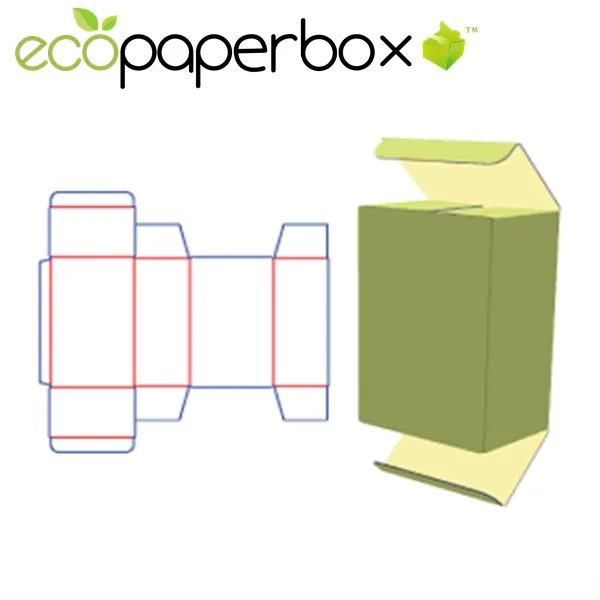
A folding carton is SBS white card, kraft or lightweight corrugated and ships flat. A rigid box is greyboard (1000-1500 gsm) mounted with 157 gsm C2S art paper or specialty paper, and it ships assembled — it is not a white-card box. The collapsible magnetic box is the only rigid type that folds flat for shipping, using the same greyboard and art paper with magnets hidden in the walls. If freight is hurting your margin, that is usually the conversation to have.
What Inserts Are Really For
With glass or HDPE bottles, the box protects the label as much as the product. A loose bottle rattles, scuffs the print and arrives looking second-hand. Inserts are not decorative — they are damage control:
- Die-cut paperboard tray: low cost, recyclable with the box, good for one fixed bottle size.
- EVA foam: strong cushioning and a premium feel, but plastic and harder to recycle curbside.
- Moulded pulp: plastic-free and protective for heavier glass, with a rougher surface.
A common mistake is sizing the insert to the bottle and forgetting the cap and shrink band. Allow a few millimetres and test a filled, sealed unit — not an empty sample.
Compliance Notes — and Where a Factory Stops
Read this part slowly. Rules for supplements vary by country and by product category, and the brand owner carries that responsibility. A converter can print accurately and build to a spec; it cannot make a product compliant.
- Health claims: we do not write or approve them. Your legal or regulatory team owns the wording and the risk.
- Supplement facts, lot numbers, expiry dates: you supply approved copy; we reproduce it accurately on the printed panel.
- Certifications: our Guangzhou workshop holds ISO 9001 quality management certification (copy on request) and High-Tech Enterprise certification (GR202544012474, valid from 19 Dec 2025 for three years), and is an SGS-audited facility. FSC-certified paper can be sourced from FSC-certified mills, with chain-of-custody documentation available on request — we are careful not to present these as our own FSC certificates.
- Child-resistant features: if your market requires them, give us the exact tested spec. A paper carton on its own is not a certified child-resistant closure.
If you need the food-contact angle instead, our food packaging materials and liners write-up covers low-migration inks. For regulated-product framing, see our CBD and hemp packaging notes.
MOQ 500, Lead Time, and Visiting the Factory
Standard MOQ across all box types is 500 pieces. The custom-box industry still quotes 1000-3000+ as a starting point, so 500 is deliberately below the norm and keeps a test-market run affordable — we would rather set one honest floor than advertise a token quantity we do not actually run.
All offset printing, lamination, die-cutting and hand assembly happen in our own Guangzhou workshop, so lead time is 7-12 working days after artwork approval. That control matters when a supplement label changes and the second run has to colour-match the first. Buyers are welcome to visit our Guangzhou factory — many international clients tour our production lines and conduct on-site inspections before committing to an order.
Honest alternatives: Arka and Noissue are easy for very small sticker and mailer runs, Packlane has a clean online configurator, and a local print shop is fastest for an urgent few hundred. What they trade away is structural range or unit cost at scale. As a factory we offer factory-direct pricing on both a 500-piece test and a 5000-piece reorder, and many marketplace suppliers are simply traders reselling the same Guangzhou boxes at a markup. Pick the route that fits your deadline and your structure — not the one with the nicest logo.
Start with the format, choose the structure, and keep compliance with the people who own it. The box itself is the easy part.