
A dieline is the flat, two-dimensional pattern a box is cut and folded from. If you have ever wondered how a drawing becomes a box that actually closes, the dieline is the answer. Here we answer the two questions buyers ask most: what exactly is a dieline, and do I need one for my order? For the deeper engineering detail, see our separate structure-file guide.
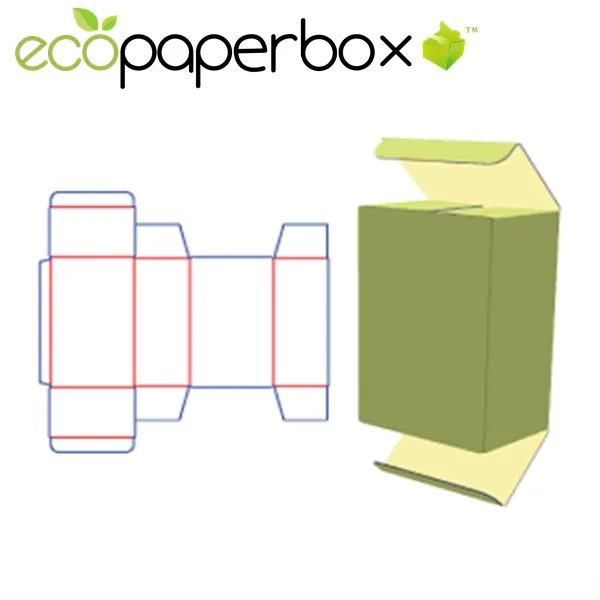
What a dieline actually is
Think of a dieline as a paper pattern, like the template for a sewn garment. It shows every cut line, fold (score) line, glue flap, and tuck flap of the finished box, laid out flat. Solid lines are cut; dashed lines are folded. Lay your artwork over that pattern and you know exactly where your logo, barcode, and text will land on the finished box.
The dieline is not the artwork. The artwork is the design you see; the dieline is the skeleton underneath it. Confusing the two is the most common rookie mistake in packaging. A beautiful design printed on the wrong dieline gives you a box that looks fine in a PDF and closes badly in real life.
Do I need a dieline?
For a stock box bought off the shelf, no. For any custom size, custom structure, or branded run, yes. The moment you specify a dimension that is not a catalog standard, someone has to draw the net of the box — the flat pattern that folds into your exact shape — and that drawing is the dieline.
- Custom size: you need a dieline so the panels match your product, not a generic template.
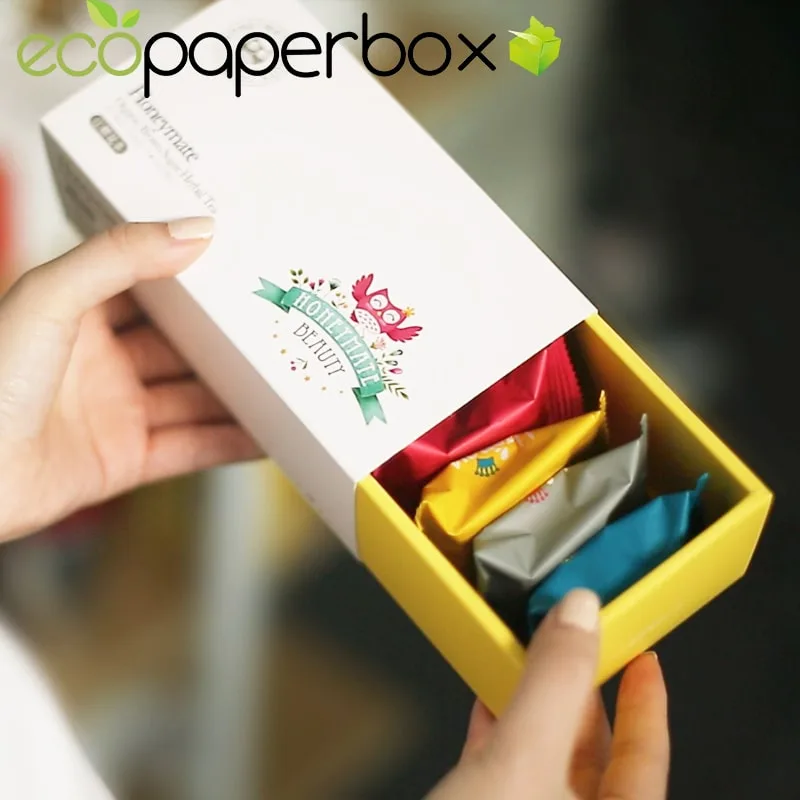
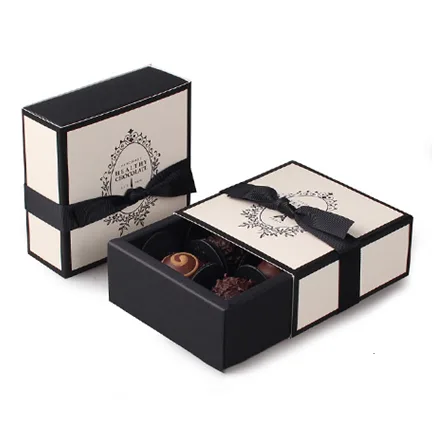
- Custom structure: a drawer box, a tray-and-sleeve set, or a collapsible magnetic box each needs its own pattern.
- Printed branding: your artwork must be placed against the dieline so nothing important lands on a fold or a glue flap.
To be fair about the alternative: some print-on-demand sites let you skip the dieline because you pick from a fixed set of shapes. That is fine if one of their shapes fits. You trade exact sizing for convenience.
What should be on the dieline
A usable dieline separates structure from graphics in layers. Your printer should be able to toggle the dieline layer on and off without disturbing the artwork. At minimum it should show:
- Cut lines and score lines clearly distinguished.
- Bleed and safe zones so color reaches the edge and text stays clear of folds.
- Dimensions in millimeters, covering both finished size and dieline footprint.
- Flute direction for corrugated board, which affects how the box folds and how strong it is.
We send a free blank (white) sample made from the dieline before printing, so you can hold the structure and confirm the fit before committing to a run. That step catches more problems than any amount of back-and-forth on a screen.
Materials change the dieline
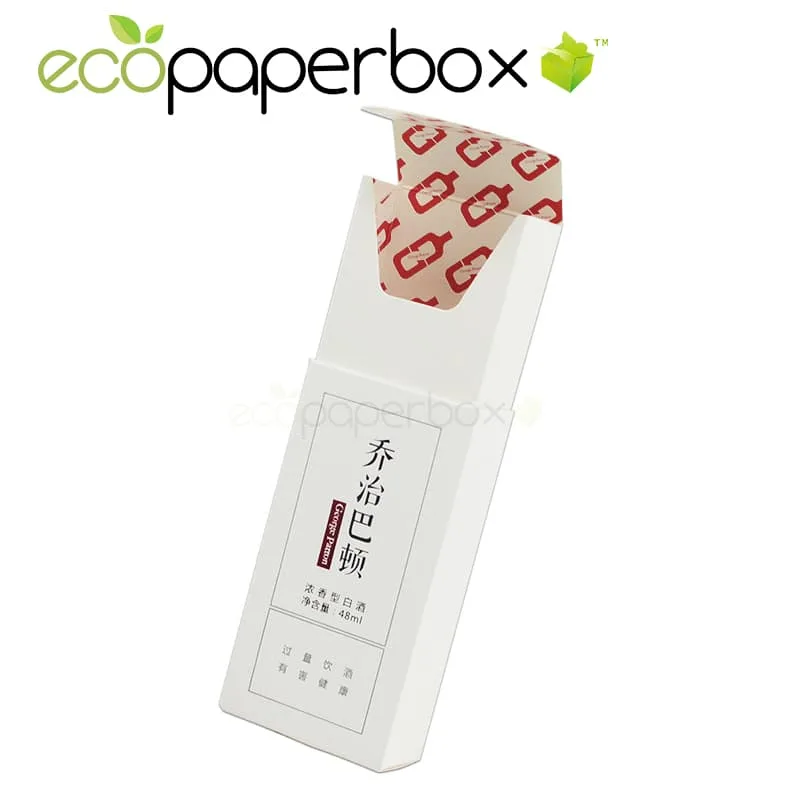
The idea is the same for every box type, but the structure is not. A folding carton made from SBS white card or kraft ships flat and uses a tuck or roll-end dieline. A corrugated mailer uses E, B, or F flute wrapped with white card or kraft, also shipped flat. A rigid gift box is greyboard (1000-1500 gsm) mounted with 157 gsm C2S art paper and ships assembled — its dieline is a different, more labor-intensive pattern. One rigid type, the collapsible magnetic box, is built to fold flat; it uses the same greyboard and art paper with hidden magnets. We never call a rigid box a "white card box" — the core is greyboard, and that distinction changes both the dieline and the freight.
Who draws it, and who owns it
At a factory this is done in-house. Our Guangzhou workshop runs offset printing, lamination, die-cutting, and hand assembly under one roof, so the dieline, the sample, and the production run come from the same team, with no handoff to a third party where details get lost. Clients are welcome to visit the factory; many international buyers tour the production lines and review samples on site before ordering. Our workshop holds ISO 9001 quality management certification (certificate copy on request) and High-Tech Enterprise certification (GR202544012474, valid from 2025-12-19 for three years), and is SGS-audited. If your project calls for FSC-certified paper, we can source it from FSC-certified mills with chain-of-custody documentation available on request.
Ask who owns the dieline before you order. If a supplier draws it, make sure you can reuse it on reorders. We keep your dieline on file so a repeat order starts from the same structure, not a redrawn approximation.
Cost, lead time, and the bottom line
We provide the dieline free, including for a test run. Our standard is MOQ 500 pieces across rigid, folding, kraft, and corrugated boxes — low enough to test a design with real customers without tying up cash in thousands of units. Production is 7-12 working days after artwork approval. Compared with a local print shop you trade some unit cost for speed; compared with a marketplace "supplier," remember that many are traders reselling the same Guangzhou boxes at a markup rather than drawing and printing them themselves.
So, do you need a dieline? For anything custom, yes — it is the blueprint that turns a design into a box that fits and closes. Get it free from your factory, review the blank sample, and keep the file for reorders. For the full structural explanation, see our dieline 101 guide and our artwork checklist.