Custom Baby Board Book Printing | EN 71-3 Safe, Rounded
- Material: 1.5-2mm greyboard, EN 71-3 safe inks
- Structure: Rounded corners, laminated pages
- MOQ: 100 pcs
- Lead Time: 18-25 days | Free page template
Custom Baby Board Book Printing - EN 71-3 Safe in greyboard core. Custom-printed, free dieline, MOQ 100 pcs.
Our Advantages

No Die and Plate Charges For Digital Samples

High quality printing

Quick Turn Around

Starting from 500pcs

Custom size and style

Competitive Price

Free Design Support

To door delivery
REQUEST A QUOTE
COMPANY SERVICES
| Bigger Discounts Offer for large orders | Bigger Discounts Offer for large orders Prices are negotiable based on your purchase volume and Fixated prices can be offered based on frequency of the order. |
| After-service | Sample cost is refundable if it's not good quality as we promised!We will refund you the defected goods values as contract listed,if the defective goods are beyond as we contracted.Our goal is to have no bad feedback and keep doing business in the future! |
| Risk Free, Quality Assurance | We've Sate of the art production facility and all printed jobs are run through our strict quality assurance department, so there are no quality complaints. |
| Printed Method | We use Off-set printing to achieve excellent printing results. However, Digital and screen printing is also available depending on box requirements. |
| About Us | Guangzhou Ecopaperbox established in 2011 is undoubtedly an accredited manufacturer of custom boxes which are exactly according to the needs and desires of the clients. Our top priority is meeting the needs and requirements of our customers. Custom Packaging and printing are provided to the customers with excellent quality on the regular basis so that maximum benefit can be achieved in the minimum amount of time. All boxes that made of paperboard, we can produce. You are welcome to make inquiry via info@ecopaperbox.com and contact us at +8619927709433. |
What Is a Board Book, and Why Is It Made This Way?
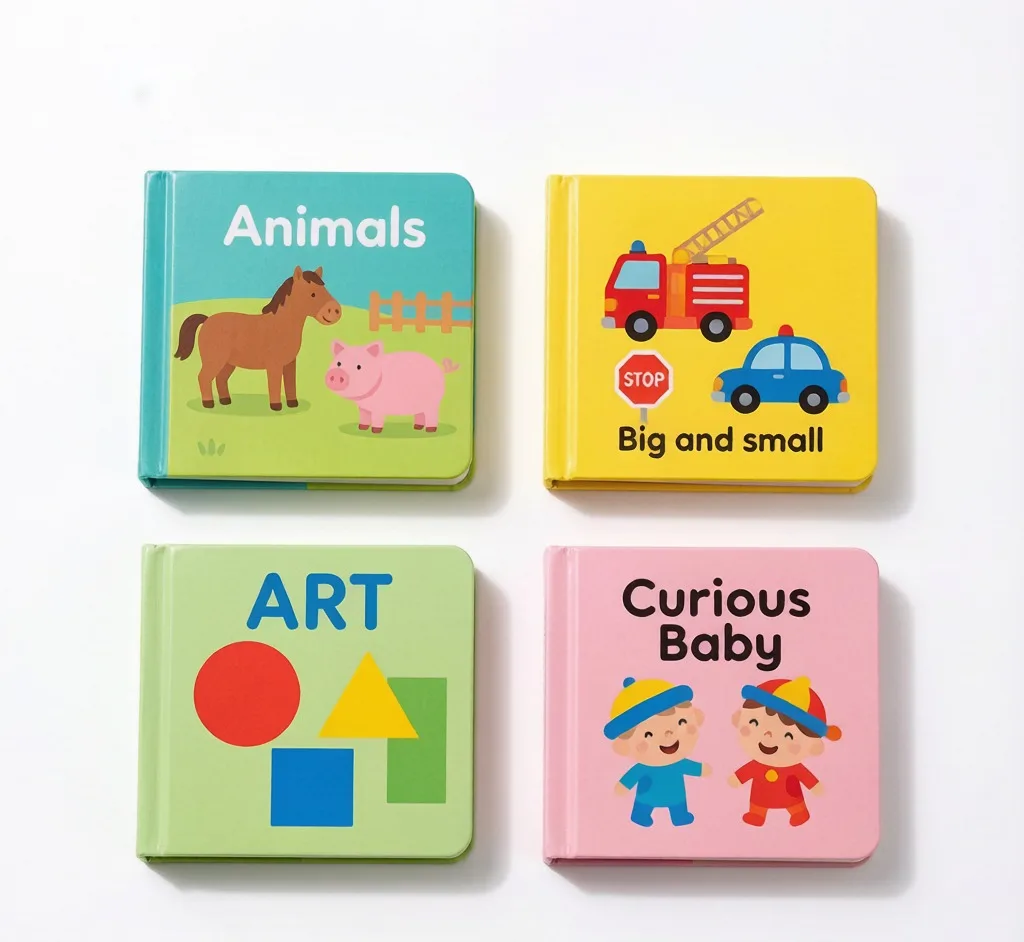
A board book is a children's book in which every page is a sheet of thick greyboard with printed paper mounted to both faces, then laminated and die-cut with rounded corners. It is built that way for one reason: a book for a child under three is legally a toy in most markets, and it has to survive being bitten, bent, thrown and wiped clean without producing a sharp edge or releasing anything harmful.
That legal classification is the part publishers new to the format most often miss. Under EU Directive 2009/48/EC and the corresponding US CPSIA rules, a board book aimed at under-threes is assessed as a toy, not as a printed product. It has to meet EN 71-1 mechanical and physical safety, EN 71-3 heavy metal migration limits on the inks, and a small-parts test. Square corners, loose components and non-compliant ink will all fail an assessment.
Everything else about the format follows from durability. Lamination is what makes the page wipe-clean and saliva-resistant. Rounded corners at a 5-10mm radius are what stop a page becoming a hazard. Greyboard is what lets a page be gripped by a toddler without creasing. None of it is decorative - it is all functional, and cutting any of it to save cost turns a compliant product into a non-compliant one.
Which Industries Use This Box, and How It Is Specified
Board books are quoted by page count, trim size and age band, because the age band sets the safety requirements.
| Industry / use case | How we normally spec it |
|---|---|
| First concept books (0-2 years) | 2mm greyboard pages, 6-12 pages, large trim, heavy lamination. The toughest build because this age band chews the book. |
| Picture and story board books (2-4 years) | 1.5mm pages, 12-24 pages, standard build. Page count rises as attention span does. |
| Novelty and interactive books | Lift-flaps, touch-and-feel patches, mirrors or sliders. Every added component needs its own small-parts and pull-test assessment. |
| Shaped and die-cut books | Books cut to an animal or vehicle silhouette. Popular in retail and gift, and the die-cut edge still has to meet the same radius rules. |
| Educational and language series | Matched trim and page count across a series, sharing one structural setup so a full range is affordable to produce. |
| Brand, museum and licensed titles | Short-run board books for gift shops and brand publishing, which is where a 100-copy minimum is the deciding factor. |
Tell us the target age band on the cover. It determines the safety testing regime, and retailers will ask for the test report before they list the title.
Material Specification
A board book is a laminate: greyboard core, printed paper faces, film over the top. Each layer has a job.
| Component / stock | Specification |
|---|---|
| Greyboard pages 1.5-2mm | Recycled greyboard is the page core of every board book. 1.5mm is the industry standard; 2mm is used for very young age bands where the book gets chewed and thrown. |
| Printed page paper | 128-157gsm coated art paper printed CMYK and mounted to both faces of each greyboard page. This is what carries the artwork. |
| Cover board | 2-3mm greyboard wrapped in printed paper, or a padded cover with a thin foam layer under the wrap for a softer feel. |
| Lamination | Matte or gloss film over every printed surface. This is not decorative on a baby book - it is what makes the page wipe-clean and saliva-resistant, and it is mandatory rather than optional. |
| Inks | Soy-based inks meeting EN 71-3 heavy metal migration limits for toys. Any book intended for under-threes has to meet toy safety rules, not just print standards. |
| Corner finish | Rounded corners with a radius of 5-10mm, die-cut on every page and on the cover. Square corners on a board book will not pass a toy safety assessment in most markets. |
Sustainability notes
- The greyboard that makes up the bulk of a board book is 80-100% recycled fibre, so the heaviest component is already recycled.
- Lamination is the trade-off: it makes the book wipe-clean and durable, which extends the life of the product far beyond a paper book, but it does complicate end-of-life recycling.
- A board book that survives two or three children is a better environmental outcome than a recyclable one that fails after a month, so durability is the sustainability decision here.
- Soy-based inks meeting EN 71-3 migration limits are used as standard, because a book for under-threes is legally a toy.
- Books ship flat and dense with no void space, which makes them one of the most freight-efficient printed products per kilogram.
Format, Page Count and Finishing Options
Page count on a board book always runs in even numbers, because every page is a mounted board sheet with two printed faces.
| Option | What it changes |
|---|---|
| Page count | 6, 8, 10, 12, 16, 20 or 24 pages. Under-twos rarely need more than 12; page count is a cost driver, since each page is a separate mounted board. |
| Board thickness | 1.5mm as standard, 2mm for the youngest age band or for a chunkier premium feel. |
| Trim size | Square formats from 140mm to 200mm are the retail standard. Non-standard sizes are possible but waste more board. |
| Corner radius | 5-10mm rounded on every page and the cover. Not optional - square corners will fail a toy safety assessment. |
| Cover | Standard wrapped board, padded cover with a foam layer, or a cover with foil and spot UV. Padded covers read as gift rather than everyday. |
| Novelty features | Lift-flaps, touch-and-feel patches, mirrors, sliders and finger-trail die-cuts, each requiring its own pull-test and small-parts assessment. |
Cutting page count is the most effective way to bring a board book budget down, because every page is a separate mounted greyboard sheet. Going from 16 pages to 12 saves far more than switching stock.
Printing and Finishing
- Offset CMYK - photographic artwork, gradients and product imagery.
- Pantone spot colour - exact brand colour matching, up to 6 colours plus varnish.
- Digital printing - the reason we can hold MOQ at 100; no plate cost on short runs.
- Hot foil stamping - gold, silver, rose gold, holographic. The most requested logo finish.
- Emboss / deboss - raised or recessed logo, with or without foil.
- Spot UV - gloss varnish over a matte laminate to pick out a logo or pattern.
- Finishes - matte, gloss, soft-touch, anti-scratch lamination or aqueous varnish.
Ordering: MOQ, Dieline and Lead Time
| Item | Detail |
|---|---|
| MOQ | 100 pcs per size and per design |
| Dieline | Free. We send a print-ready structural dieline to your designer before you commit to anything. |
| Pre-production sample | Plain structural sample in 3-5 days, printed sample in 5-7 days. Sample cost is credited against the bulk order. |
| Production lead time | 18-25 working days after artwork and sample sign-off |
| Artwork format | AI or PDF, CMYK, 300dpi, 3mm bleed, fonts outlined, placed on our dieline |
| Shipping | Books ship dense and flat with no void space, which makes them one of the cheapest printed products to freight per kilogram. |
Send print-ready artwork as a single PDF with 3mm bleed and a 8-10mm safety margin from the trim, because the corner radius cuts into the page. We supply a free page template showing the safe area on the first pass.
Technical Specifications
| Material | greyboard core, printed paper faces, film lamination (EN 71-3 safe) |
|---|---|
| Structure | Board book |
| Printing | 4-color offset / flexo; screen print available |
| Finish | matte or gloss lamination, spot UV, foil stamping on request |
| Sizes | fully custom – tooled from your dieline |
| MOQ | 100 pcs |
| Lead time | 7–12 working days after proof approval |
| Inks | low-migration, food-grade on request; ISO 9001 system |
Related Packaging
Packaging for retail and gift sets
Rigid Gift Boxes | Kraft Gift Boxes | Sleeve Carton
Shipping and display
Custom Printed Shipping Boxes | Counter Display Carton
Surface Choice
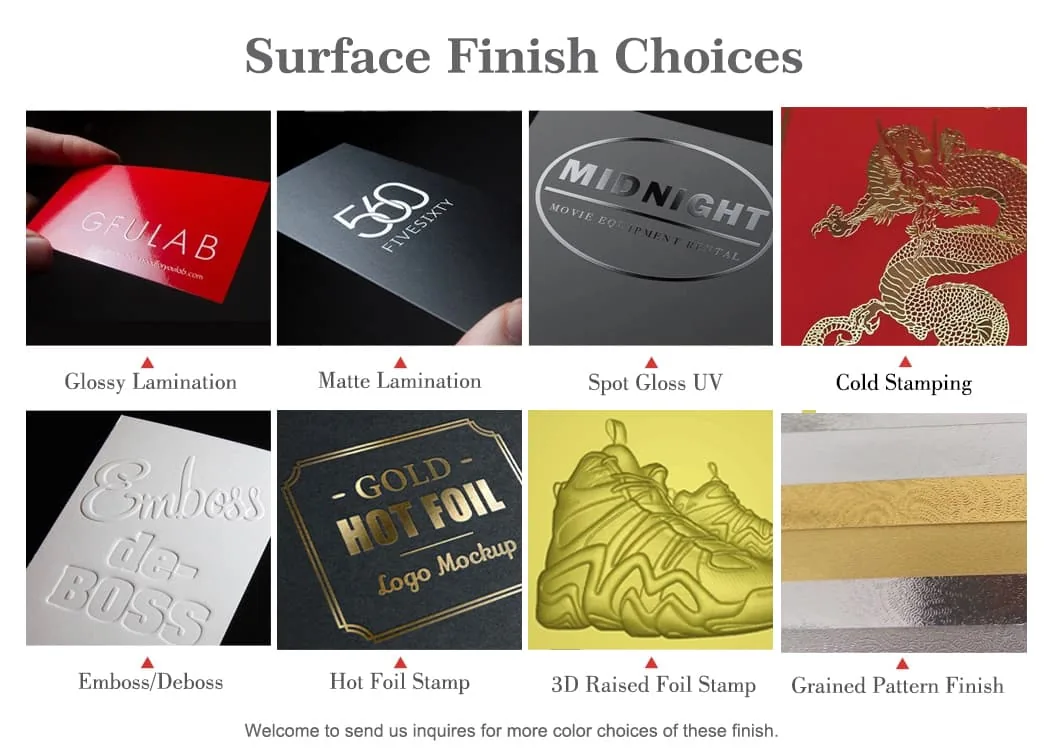
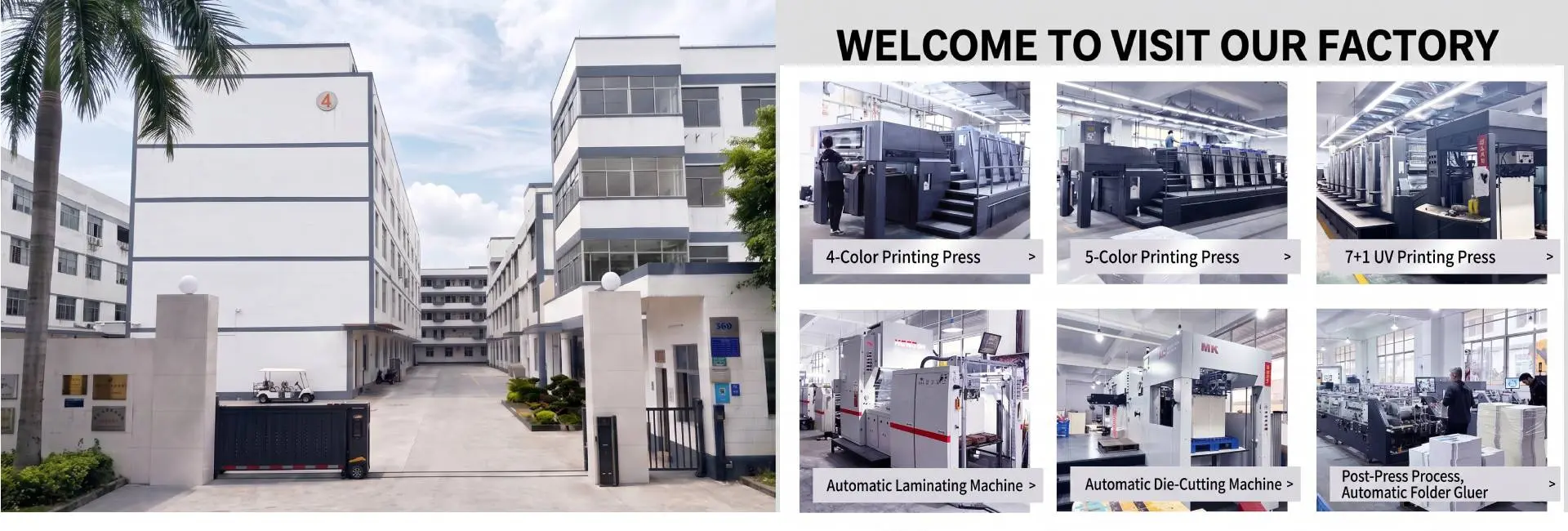
Our Guangzhou custom packaging factory runs four-color offset printing, automatic lamination, die-cutting and rigid box assembly on one floor. In-house production keeps lead times short and print color consistent from the first sample to full volume. Buyers are welcome to request a video tour or a factory audit before placing an order.

Packing Method For Corrugated Packaging:
Generally no need to put the PE bags inside of the cartons. Since the boxes are glued a layer of cardboard, generally production time is not long enough to dry the paper box. If you tie the PE bags, the steamed water pearl will be produced inside of the bags.

Product Details
- Custom sizes & shape – made to your exact dimensions, flute and box style.
- Eco-friendly board – recyclable corrugated / kraft material with low-migration inks on request.
- Secure closure – self-locking or magnetic options keep contents safe in transit.
- Full-surface printing – CMYK, Pantone, foil, emboss and spot UV available.
- Low MOQ & fast turnaround – start from 100 pcs, bulk pricing for 5,000+ units, 7–15 day lead time.
Customer Reviews
We ordered these custom baby board book printing - en 71-3 safe for our retail line and the print was sharp. Free dieline and fast tooling.
Solid custom baby board book printing - en 71-3 safe – the structure held up in transit and the finish looks premium on shelf.
Good communication and the MOQ of 100 worked for our small batch. We will reorder.
Frequently Asked Questions
Why do board books have to have rounded corners?
Because a book aimed at children under three is legally a toy, not a printed product, and it is assessed against EN 71-1 in the EU and CPSIA rules in the US. A square corner on a 1.5mm board page is a point hazard and will fail that assessment. The standard radius is 5-10mm, die-cut on every page and on the cover. Retailers will ask for the test report before they list a title.
What board thickness should the pages be?
One and a half millimetres is the industry standard and suits most titles. Two millimetres is used for the youngest age band, where the book is chewed and thrown rather than read, and for premium gift editions where the extra chunk is part of the feel. Below 1.5mm the page starts creasing under a toddler grip, which is the point at which it stops being a board book.
Is the lamination necessary or is it just for looks?
It is functional. Lamination is what makes the page wipe-clean and saliva-resistant, and without it the printed paper delaminates from the greyboard the first time the book gets wet or chewed. It is also the layer that complicates recycling - but a book that survives two or three children is a better environmental outcome than a recyclable one that fails in a month.
How many pages can a board book have?
Always an even count, because each page is a single greyboard sheet printed on both faces. Six, eight, ten, twelve, sixteen, twenty or twenty-four. Under-twos rarely need more than twelve. Page count is the biggest cost driver in the whole job - going from sixteen pages to twelve saves more than any change of stock or finish.
Do the inks have to meet a safety standard?
Yes. EN 71-3 sets migration limits for heavy metals in materials a child may mouth, and it applies to the inks on a board book. We print with soy-based inks that meet those limits as standard. This is not a specification worth economising on - a failed migration test means the whole print run is unsellable.
Can you print just 100 copies?
Yes, digitally. Traditional board book printers usually start at 2,000 or 3,000 copies because of plate and mounting setup costs, which is why so many independent authors and small publishers never get past a quote. Digital printing removes the plate cost, so a 100-copy run is viable. Above roughly 1,500 copies offset becomes cheaper per unit.
What artwork do you need?
A single print-ready PDF, CMYK, 300dpi, with 3mm bleed and a safety margin of 8-10mm from the trim - the corner radius cuts into the page, so anything closer than that risks losing artwork. We send a free page template with the safe area and the corner radius marked before you start, which avoids a full re-layout later.