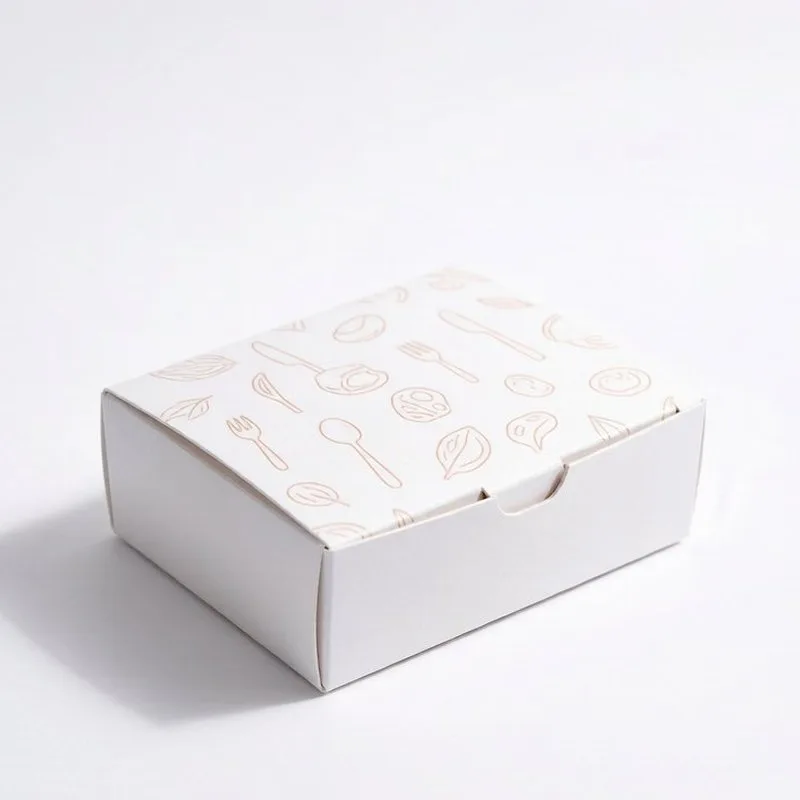
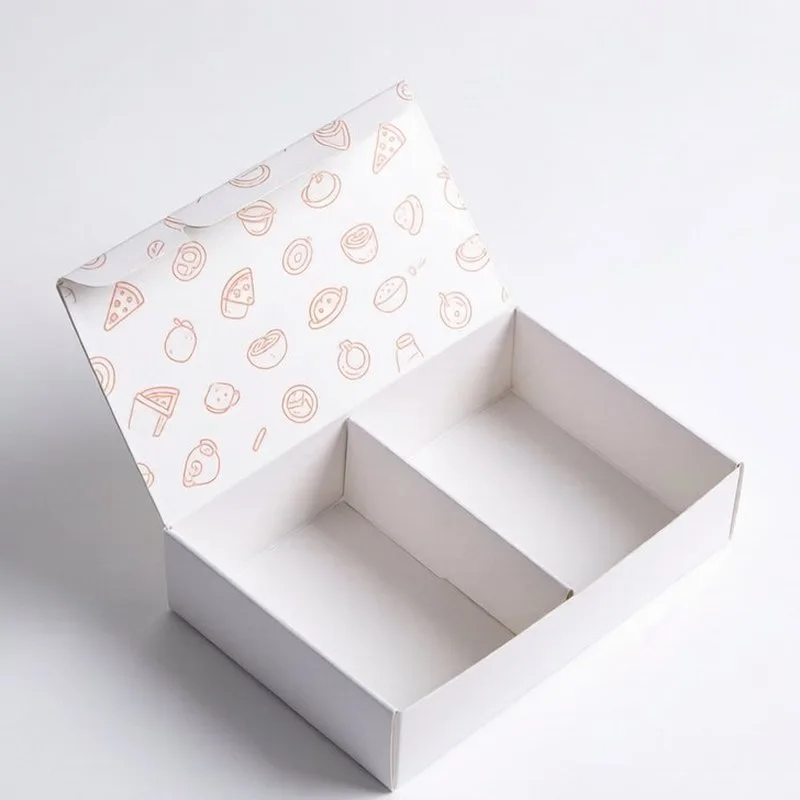
Custom Two-Compartment Meal Boxes | PFAS-Free Delivery
- Material: Kraft 350-400gsm, PFAS-free / PLA lined
- Structure: Two-compartment tray with hinged lid
- MOQ: 100 pcs
- Lead Time: 8-14 days | Free dieline
Two-Compartment Meal Boxes in SBS / C1S folding box board. Custom-printed, free dieline, MOQ 100 pcs.
Our Advantages

No Die and Plate Charges For Digital Samples

High quality printing

Quick Turn Around

Starting from 500pcs

Custom size and style

Competitive Price

Free Design Support

To door delivery
REQUEST A QUOTE
COMPANY SERVICES
| Bigger Discounts Offer for large orders | Bigger Discounts Offer for large orders Prices are negotiable based on your purchase volume and Fixated prices can be offered based on frequency of the order. |
| After-service | Sample cost is refundable if it's not good quality as we promised!We will refund you the defected goods values as contract listed,if the defective goods are beyond as we contracted.Our goal is to have no bad feedback and keep doing business in the future! |
| Risk Free, Quality Assurance | We've Sate of the art production facility and all printed jobs are run through our strict quality assurance department, so there are no quality complaints. |
| Printed Method | We use Off-set printing to achieve excellent printing results. However, Digital and screen printing is also available depending on box requirements. |
| About Us | Guangzhou Ecopaperbox established in 2011 is undoubtedly an accredited manufacturer of custom boxes which are exactly according to the needs and desires of the clients. Our top priority is meeting the needs and requirements of our customers. Custom Packaging and printing are provided to the customers with excellent quality on the regular basis so that maximum benefit can be achieved in the minimum amount of time. All boxes that made of paperboard, we can produce. You are welcome to make inquiry via info@ecopaperbox.com and contact us at +8619927709433. |
What Is a Two-Compartment Meal Box?
A two-compartment meal box is a food-grade paperboard container divided into separate wells, so that two elements of a meal travel without touching. It exists to solve one specific delivery problem: sauce migrating into a side, or a hot component steaming a cold one. Both are among the most frequent complaint categories on delivery platforms, and both are structural problems rather than food problems.
The compartment divider is the part that decides whether the box works. A crease-formed divider in the same piece of board is the cheapest option and is fine for dry-to-dry separation - rice and a dry curry, chips and a burger. It is not liquid-tight. If one side holds anything wet, you need either a moulded pulp insert or a heat-sealed lined tray, because liquid will always find a creased seam.
The second decision is hot versus cold. A hot component generates steam, and steam trapped over a cold salad wilts it inside ten minutes. Where a box carries both, it needs a vented lid over the hot side and a sealed lid over the cold side - which is a dieline decision, not something that can be corrected with a sticker later.
Which Industries Use This Box, and How It Is Specified
Compartment meal boxes are quoted by what is being kept apart, because that determines whether a creased divider is sufficient.
| Industry / use case | How we normally spec it |
|---|---|
| Rice and curry / main plus side | Kraft board with a crease-formed divider and a PFAS-free barrier. Dry-to-semi-wet, so a board divider works. |
| Salad plus hot protein | Vented lid over the hot side, sealed over the cold. This is where most single-lid meal boxes fail. |
| Burger and fries | Deep well plus a shallow well, with vents over the fries. Fries without ventilation arrive soft, and that is the single most common delivery complaint. |
| Bento and multi-item meals | Moulded pulp insert inside a printed sleeve, which gives deeper and better-sealed compartments than creased board. |
| Meal-prep and subscription boxes | PE or PLA lined board for chilled ready meals, stackable in a fridge and reheatable in a microwave without the lid. |
| Airline, catering and events | Rigid four-corner tray base with a separate lid, designed to stack in a trolley without crushing. |
Tell us if either compartment holds liquid. A creased board divider is not liquid-tight, and no amount of extra board weight will make it so - it needs a moulded pulp or lined tray insert.
Material Specification
The lining decides the leak performance and the disposal route at the same time, so it is worth settling before board weight.
| Component / stock | Specification |
|---|---|
| Kraft board 350-400gsm | Unbleached brown board with a PFAS-free grease barrier. The standard body stock for a compartment meal box that has to hold hot food for 30-40 minutes. |
| PE-coated food board | Polyethylene-lined board for wet or saucy meals. It gives the best leak resistance but the coating has to be separated at the mill, so it is not the compostable route. |
| PLA-coated food board | Plant-based lining, commercially compostable and certified to EN 13432. It handles hot food but not oven reheating. |
| Moulded pulp inserts | Where the compartments need to be deep or curved, a moulded pulp tray inside a printed sleeve gives better sealing than creased board. |
| E-flute corrugated | 1.5mm laminated flute for heavier or delivery-only meal boxes, where the pack is stacked in a courier bag rather than carried by hand. |
| Inks and coatings | Soy-based inks printed on the outer face only, with a water-based varnish. Nothing is printed on the food-contact side. |
Sustainability notes
- PFAS-free is now the baseline, not a feature. Fluorochemical grease barriers are banned or being phased out across the EU, California, New York and several other US states, so any quote that still relies on them is a liability.
- A compostable claim only holds if every layer composts. A PLA-lined board with a PET window is not compostable, and it is the most common inconsistency we find on eco-branded food packaging.
- Unbleached kraft skips the bleaching stage entirely, which is a real reduction in water and chemical load, and it is also what buyers now read as the honest option.
- Printing on the outer face only, with no coating on the food-contact side, keeps the board simpler to recover and avoids any migration question.
- Right-sizing beats material switching: trimming a compartment box to the actual portion size removes more board across a season than changing stock does.
Compartment, Lid and Lining Options
Compartment ratio, lid type and lining are the three variables. Everything else follows from them.
| Option | What it changes |
|---|---|
| Compartment ratio | 50/50, 60/40 or 70/30. A 70/30 split is the most common for a main plus a side, and it should be set from your actual portion weights. |
| Divider type | Crease-formed board for dry separation, moulded pulp insert for wet, or a separate lined tray dropped into a printed outer. |
| Lid | Hinged one-piece lid, separate lid, or a clear PET lid where the meal is displayed in a chiller. |
| Lining | PFAS-free water-based barrier, PE lining for maximum leak resistance, or PLA lining for the compostable route. |
| Ventilation | Vents over the fried or hot compartment only. Venting both sides dries out whatever is on the cold side. |
| Tamper evidence | Perforated seal tab or a printed sticker landing zone, which most delivery platforms now expect. |
Set the compartment ratio from a weighed portion, not from an estimate. A 50/50 box holding a 70/30 meal overfills one side and looks mean on the other, and it is the most common reason a first sample gets rejected.
Printing and Finishing
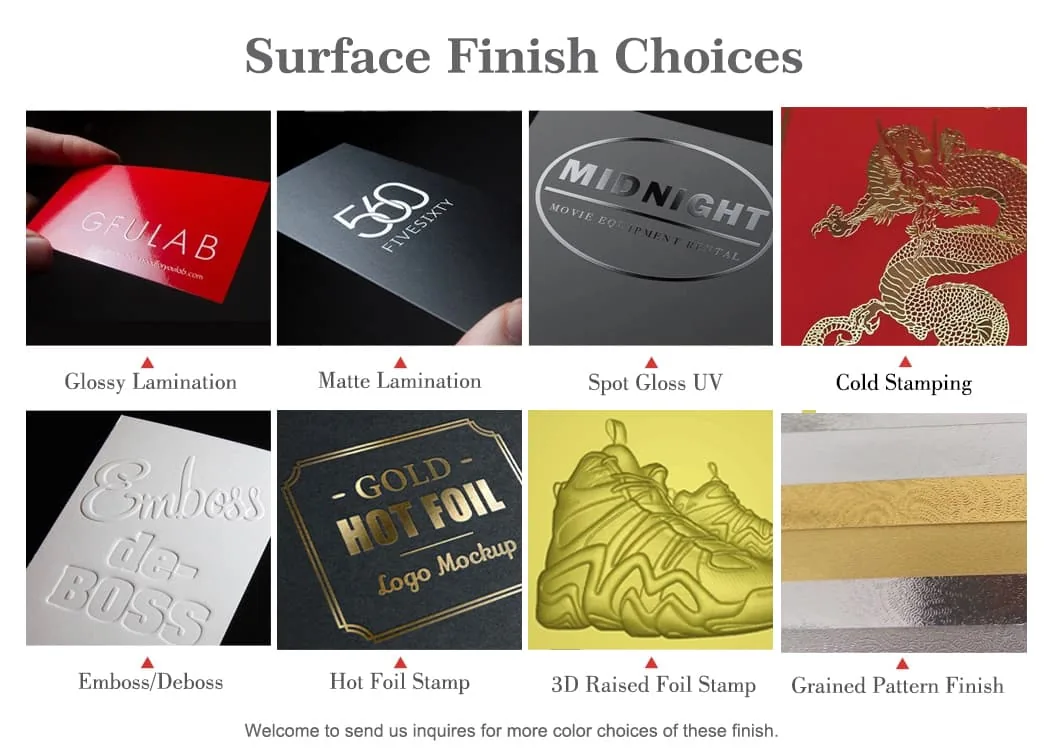
- Offset CMYK - photographic artwork, gradients and product imagery.
- Pantone spot colour - exact brand colour matching, up to 6 colours plus varnish.
- Digital printing - the reason we can hold MOQ at 100; no plate cost on short runs.
- Hot foil stamping - gold, silver, rose gold, holographic. The most requested logo finish.
- Emboss / deboss - raised or recessed logo, with or without foil.
- Spot UV - gloss varnish over a matte laminate to pick out a logo or pattern.
- Finishes - matte, gloss, soft-touch, anti-scratch lamination or aqueous varnish.
Ordering: MOQ, Dieline and Lead Time
| Item | Detail |
|---|---|
| MOQ | 100 pcs per size and per design |
| Dieline | Free. We send a print-ready structural dieline to your designer before you commit to anything. |
| Pre-production sample | Plain structural sample in 3-5 days, printed sample in 5-7 days. Sample cost is credited against the bulk order. |
| Production lead time | 8-14 working days after artwork and sample sign-off |
| Artwork format | AI or PDF, CMYK, 300dpi, 3mm bleed, fonts outlined, placed on our dieline |
| Shipping | Ships flat-packed and glued, which keeps freight volume and duty low. |
Send a photo of a plated portion, or the weights of each component. We size the compartments around the real portion rather than a standard, which is what stops the box looking half-empty on delivery.
Technical Specifications
| Material | SBS / C1S folding box board, 250–400 gsm |
|---|---|
| Structure | Folding carton |
| Printing | 4-color offset / flexo; screen print available |
| Finish | matte or gloss lamination, spot UV, foil stamping on request |
| Sizes | fully custom – tooled from your dieline |
| MOQ | 100 pcs |
| Lead time | 7–12 working days after proof approval |
| Inks | low-migration, food-grade on request; ISO 9001 system |
Related Packaging
Other food service packaging
Kraft Takeout Boxes with Window | Pie Boxes with Window
Carton structures we cut this in
Four Corner Tray | Auto Bottom Carton | 1-2-3 Bottom Carton | Sleeve Carton
Surface Choice
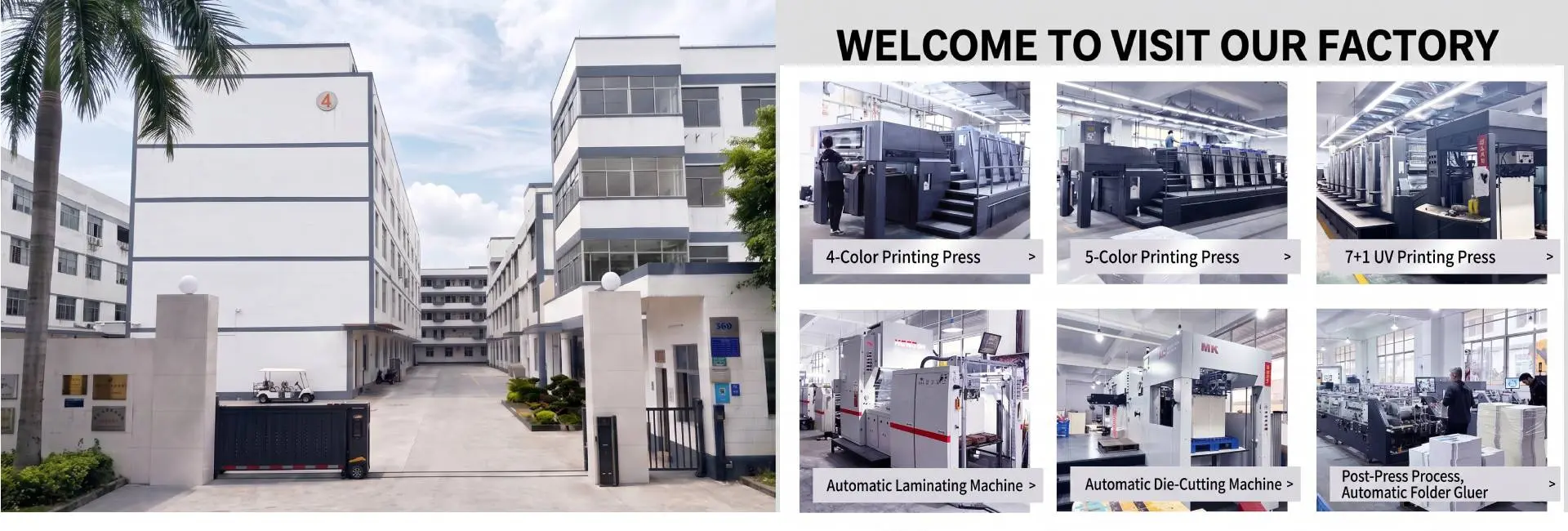
Our Guangzhou custom packaging factory runs four-color offset printing, automatic lamination, die-cutting and rigid box assembly on one floor. In-house production keeps lead times short and print color consistent from the first sample to full volume. Buyers are welcome to request a video tour or a factory audit before placing an order.

Packing Method For Corrugated Packaging:
Generally no need to put the PE bags inside of the cartons. Since the boxes are glued a layer of cardboard, generally production time is not long enough to dry the paper box. If you tie the PE bags, the steamed water pearl will be produced inside of the bags.

Product Details
- Custom sizes & shape – made to your exact dimensions, flute and box style.
- Eco-friendly board – recyclable corrugated / kraft material with low-migration inks on request.
- Secure closure – self-locking or magnetic options keep contents safe in transit.
- Full-surface printing – CMYK, Pantone, foil, emboss and spot UV available.
- Low MOQ & fast turnaround – start from 100 pcs, bulk pricing for 5,000+ units, 7–15 day lead time.
Customer Reviews
We ordered these two-compartment meal boxes for our retail line and the print was sharp. Free dieline and fast tooling.
Solid two-compartment meal boxes – the structure held up in transit and the finish looks premium on shelf.
Good communication and the MOQ of 100 worked for our small batch. We will reorder.
Frequently Asked Questions
Will sauce leak between the two compartments?
With a crease-formed board divider, eventually yes - a crease is a seam and liquid finds seams. It is fine for dry-to-dry separation such as rice and a dry curry, or a burger and fries. If either side holds sauce, dressing or anything free-flowing, you need a moulded pulp insert or a lined tray, which have continuous walls with no seam at the base.
Can a compartment meal box go in the microwave?
A PE-lined or PLA-lined board box can be microwaved with the lid off, at normal reheating power. A PET lid cannot. Moulded pulp inserts microwave well. What does not work is any box with a metallised finish or foil detailing in the print, so if reheating is part of the customer experience, keep foil off the artwork.
Are these boxes compostable?
They can be, but only if every layer is. Kraft board with a PLA lining and no plastic lid is commercially compostable to EN 13432. Kraft board with a PE lining is not - the polyethylene has to be separated at the mill. A PET lid disqualifies the claim regardless of the base. The mismatch between a compostable base and a plastic lid is the most common inconsistency we see in this category.
What compartment ratio should I choose?
Weigh a plated portion of each component and set the ratio from that. Seventy-thirty is the most common for a main plus a side, fifty-fifty for two equal elements. Guessing at this is the main reason a first sample gets rejected - a 50/50 box carrying a 70/30 meal overfills one side and looks stingy on the other.
Do I need vent holes on a meal box?
On the hot or fried side, yes. On the cold side, no. Venting both sides means the salad dries out while the fries stay crisp, which trades one complaint for another. Selective venting over one compartment costs nothing extra as long as it is decided before we cut the dieline.
Is PFAS still used in food packaging?
Not by us, on any job. Fluorochemical grease barriers are banned or being phased out across the EU, California, New York, Washington, Minnesota and other jurisdictions. We use water-based grease barriers, or PE or PLA linings where the food is genuinely wet. If a supplier is still quoting a fluorochemical treatment, that specification will not be legal in your market for much longer.
What is the minimum order?
One hundred pieces per size and per design, printed digitally so there is no plate cost. That is low enough for a single restaurant to test a delivery-only menu. Offset becomes cheaper above roughly 3,000 pieces.